How to Choose Your First Crochet Project: Eight Patterns That Actually Work
How to pick a first crochet project that you'll finish, what makes a pattern beginner-friendly past the difficulty label, and eight specific patterns that earn their reputation.
On this page21 sections▾
The bottleneck for new crocheters isn't the stitches; it's choosing what to make first. Pattern libraries are vast, "beginner" is an inconsistent label, and a project that takes three hours for an experienced crocheter takes fifteen for a learner. The wrong first project (too big, too fiddly, requires seaming you don't yet know how to do) is the most common reason people quit crochet inside the first month.
This guide covers how to evaluate a pattern past the difficulty tag, then lists eight specific patterns that work for first-timers because of their structure, not because of their marketing.
How to evaluate a pattern before you start
Read the stitch list, not the difficulty label
"Beginner" on a pattern can mean "uses only single crochet" or it can mean "advanced single crochet with magic rings, color changes, and modular assembly." Scroll to the materials and abbreviations sections. If the list includes split stitches, popcorn stitches, post stitches, or any abbreviation you've never seen, the pattern is past your level even if the badge says beginner.
A real beginner pattern uses two or three of: chain, slip stitch, single crochet, half-double crochet, double crochet. That's it.
Pad time estimates by 3x
A pattern that says "3 hours" will take a first-timer 9-15 hours. You'll recount, you'll rip back, you'll re-read the same line four times. This isn't slow learning; it's normal learning. Pick a project where 3x the estimate still fits your life, not one where the rated time barely fits and the real time wrecks you.
For a first project, aim for something where the original estimate is 5-10 hours. That puts your real time at 15-30, which is the right scope for staying engaged without losing momentum.
Yarn weight: medium or thicker
Worsted (medium, #4) and aran are the right yarn weights for learning. The stitches are big enough to see clearly as you make them. Mistakes are visible early, when they're cheap to fix. Anything thinner (sport, DK, fingering) makes individual stitches harder to read; anything thicker (bulky, super bulky) hides tension issues that will hurt you when you go back to worsted.
Skip novelty yarn (fuzzy, boucle, eyelash, anything textured) for the same reason. You need to see what your hook is doing.
Match the project type to your life
Crochet projects fall into four rough categories with different shapes of commitment:
Blankets and dishcloths. Same stitch repeated forever. Low stakes, easy to put down and pick up, satisfying as a meditative activity. Bad if you need an early sense of accomplishment, because the finish line is far away.
Hats and amigurumi. Short. Defined finish. Teach shaping (increases and decreases) early, which unlocks everything else. Require seaming or assembly. Good if you want a sense of completion quickly.
Shawls and wraps. Long, but most beginner shawls have simple stitch bases that get repetitive in a useful way. You can wear them. Forgiving of small mistakes because they drape.
Garments. High stakes. Gauge matters. Usually require seaming and fitting. Don't make your first project a sweater unless you've already finished a blanket.
Pick the category that matches how much focused time you have and what you want from the finished thing.
Eight patterns that earn their reputation
All eight are beginner-difficulty per the pattern's own designer, work up in 5-35 hours depending on size, and use stitches a new crocheter can pick up.
Rainbow Ripple Baby Blanket

Find this pattern on HoneyBee
Celeste Young. Aran weight. The ripple stitch creates wave-shaped rows from paired increases and decreases on a foundation of double crochets. The pattern is rhythmic once you've done two rows: increase three at the peak, decrease three at the valley, plain stitches in between. The color stripes give you a natural place to stop each session, which is a quiet superpower for staying motivated. Plan on 15-20 hours for the standard size. If you want this to be a baby gift, start two months before the shower; first-time crocheters underestimate blanket time, badly.
Granny Stripes

Find this pattern on HoneyBee
Lucy of Attic24. DK weight. A flat blanket made from rows of granny-stitch clusters in alternating colors. Two stitches (chain, double crochet) and a four-row color repeat. The pattern publishes as a "recipe" rather than a fixed size, with a percentage formula so you can scale to baby blanket, lap throw, or full bed. 20-30 hours for a lap throw. Lucy's photo tutorials are the calibration point for "beginner-friendly written instructions"; bookmark them as a reference even if you make a different project first.
Neat Ripple

Find this pattern on HoneyBee
Lucy of Attic24. DK weight. Same designer as Granny Stripes, more delicate ripple than Rainbow Ripple. The shallower waves are easier to keep even row-to-row, which makes this a better first ripple project than Rainbow Ripple if you're worried about tension drift. The DK weight (vs Rainbow Ripple's aran) also means smaller hook and finer fabric, so the finished blanket reads as "throw" rather than "baby blanket." 15-20 hours. Pick this one over Rainbow Ripple if you want a more refined look or already have a stash of DK weight you want to use.
Dumpling Kitty
Find this pattern on HoneyBee
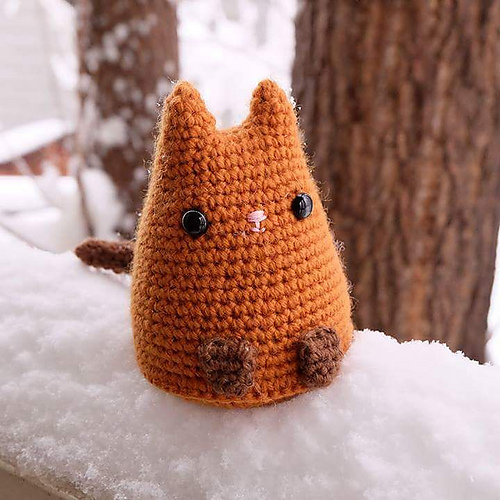
Sarah Sloyer. Aran weight. A small, chunky cat amigurumi worked in the round with single crochet, magic ring start, basic increases and decreases for shaping, and a small amount of embroidery to add the face. The aran weight makes this faster than typical amigurumi (which usually uses fingering or sport on a 3mm hook). 5-8 hours, which puts it in the "weekend project" slot and makes it a good first amigurumi if you want to learn shaping without committing to a multi-week project. The cat has a frumpy quality on purpose; it doesn't have to be precise to look right.
Secret Paths
Find this pattern on HoneyBee
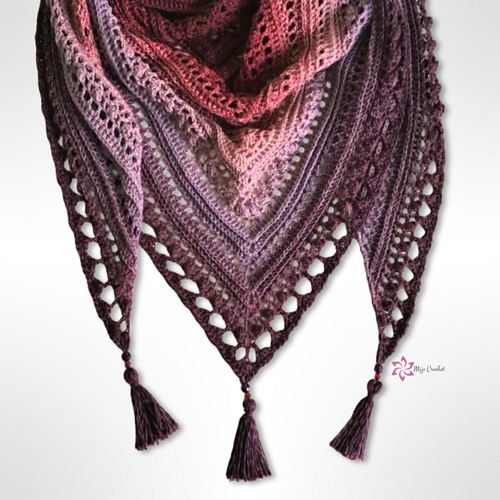
Johanna Lindahl. Light fingering weight. A triangular shawl built top-down from the neckline outward, using front-post and back-post double crochet to create subtle textured stripes. Light fingering is finer than what's typically recommended for beginners, so size up the hook by one and accept that the finished shawl will be a bit looser than the pattern photo if you want to make this without dropping into fingering for the first time. 10-15 hours for a small wearable size. The reward is a real wearable shawl, which raises the stakes of finishing it.
Divine Hat

Find this pattern on HoneyBee
Sarah Arnold. Worsted weight. A textured hat that starts at the crown with a magic ring and works outward, with front-post double crochets creating a ribbed pattern. Worked top-down means you see the hat shape emerge in the first thirty minutes, which makes this satisfying early. 6-10 hours. The ribbing technique transfers to every hat you make after this one. Pick a wool blend over acrylic; the post stitches block crisper in wool.
The Campfire Cardigan

Find this pattern on HoneyBee
Jess Coppom. Aran weight. Worked as flat rectangles with seaming at the end, designed to fit oversized so sizing mistakes get absorbed by the drape. Don't make this your first crochet project. Make it your third or fourth, after you've finished at least one blanket and have a feel for tension at scale. 20-30 hours for the construction, plus a few hours for seaming. The result is a piece you'll actually wear, which is the rarest property in beginner garment patterns.
Battenberg Blanket

Find this pattern on HoneyBee
Sandra Paul. Fingering weight. Modular: you make many small squares and join them as you go rather than seaming at the end. Each square is a 30-60 minute project, which makes this a strong choice for crochet you can carry in a bag and work on during a commute. 25-35 hours total. The fingering weight is a stretch for a first project; if you've never worked with thin yarn, do one square as a test before committing. The modular structure is forgiving of mistakes because each square is small enough to redo without losing meaningful work.
Which one to start with
If you've finished any crochet at all (a granny square, a swatch, a dishcloth) and want something useful, Granny Stripes. It uses two stitches, has clear written instructions plus photo tutorials, scales to whatever size you want, and forces you to settle into the rhythm of crochet without introducing too many variables.
If you want a fast win in a weekend, Dumpling Kitty. The cat takes about a quarter of the time a blanket does and teaches you working-in-the-round mechanics that the blanket doesn't.
If you've already finished a blanket and want to wear something, Divine Hat first, then Secret Paths as the next step up. Hat in worsted teaches post stitches in a small project; shawl in light fingering teaches working with thinner yarn over a shape that matters.
Skip the cardigan and the Battenberg until you have one blanket and one in-the-round project behind you.
FAQ
Do I need to swatch for these?
For the blankets, no. A blanket two inches off in either direction is still a blanket. For Divine Hat and the cardigan, yes. Make a 4-inch swatch in the called-for stitch and check it against the pattern's gauge. If you're off by more than 10%, change hook size and re-swatch. This is the single most common reason beginner garments don't fit.
What if I make a mistake I can't find?
Rip back to the last row you're sure was right and start again from there. Don't try to surgically fix a mistake you can't see; that path leads to making it worse. For amigurumi, rip back to the last round you counted. For blankets, rip back to the row before the color change.
Can I substitute the yarn?
For weight-flexible projects (Granny Stripes, the ripples), yes, as long as you swap within the same weight category (worsted for worsted, DK for DK). For the cardigan and the hat, the original yarn is part of why the pattern works; sub at your own risk and budget a test swatch first.
What if I lose interest?
Set a timer for 20 minutes and pick up the project. If you're still bored at the end of 20, the project is wrong for you. Frog it, save the yarn, pick something else. Crochet is too much of a time commitment to spend it dreading the next session.
Related guides
- How to Crochet for Beginners
- How to Read a Crochet Pattern
- Crochet Supplies for Beginners
- How to Crochet a Granny Square
- Free Crochet Blanket Patterns
For yarn weight conventions when you start substituting, the Craft Yarn Council's yarn weight system is the universal reference.
Pick one pattern. Read it start to finish before buying yarn. Then buy the yarn.
More from the HoneyBee blog
Pattern round-ups, tutorials, and crafting inspiration from the HoneyBee community.
Read more articles