Moss Stitch Crochet: How-To Guide and Free Pattern Ideas
Learn the moss stitch (linen stitch) step-by-step, plus 15 free crochet patterns including blankets, hats, dishcloths, and shawls.
On this page26 sections▾
The moss stitch, also called the linen stitch, is one of the most forgiving and satisfying stitches in crochet. It's built on a simple rhythm: single crochet, chain, repeat. But what makes it special is how those offset rows create a dense, durable fabric with a subtle texture that looks hand-woven. Once you nail the pattern, projects made in moss stitch work up faster than you'd expect and hold their shape beautifully. It's especially popular for blankets because of how sturdy and breathable it is, but you'll find it used everywhere from beanies to dishcloths. Whether you're a beginner looking for your next textured stitch or someone wanting to build a whole collection of moss stitch projects, this guide will walk you through the technique and show you patterns that showcase what's possible.
What Is the Moss Stitch?
The moss stitch creates a flat, textured fabric by alternating single crochet stitches with chain stitches. Sometimes you'll also hear it called the linen stitch, and the two terms are often used interchangeably. The result is a reversible, fabric-like texture that's perfect for pieces you'll want to use or wear. Unlike stockinette stitch in knitting, which can curl at the edges, moss stitch naturally lies flat.
The stitch works in a two-row pattern:
- Row 1: Single crochet in the first stitch, chain 1, skip 1, then repeat across.
- Row 2: Single crochet in the chain space, chain 1, skip the single crochet, repeat.
This offset pattern is what gives the stitch its character. Each row shifts by one stitch, which locks everything together and prevents curling.
How to Crochet the Moss Stitch
Here's how to work moss stitch from the ground up:
Setup: Chain an even number of stitches. If you chain 21, you'll have 20 stitches to work with.
Row 1:
- Single crochet in the second chain from the hook.
- Chain 1, skip the next chain.
- Single crochet in the next chain.
- Repeat steps 2-3 all the way across.
- Chain 1 and turn at the end.
Row 2 (and all following rows):
- Skip the first stitch entirely.
- Single crochet in the first chain-1 space.
- Chain 1, skip the next single crochet.
- Single crochet in the next chain-1 space.
- Repeat steps 3-4 across the row, always inserting your hook into the chain space above the chain space from the previous row.
- Chain 1 and turn at the end.
The rhythm becomes: single crochet in a chain space, chain 1 over the single crochet, repeat. Your stitches should stack in columns, and your fabric will feel dense and even.
Common mistake: Don't work into the actual single crochets on subsequent rows. You're always working into the chain spaces. This takes focus at first, but becomes automatic after a few rows.
Tips for Perfect Moss Stitch
Keep even tension. Moss stitch shows tension inconsistencies more than some other stitches, especially in the chain spaces. Try to keep your chain-1 stitches and single crochets the same height.
Yarn weight matters. This stitch works beautifully in sport, DK, worsted, and aran weights. Heavier yarns make the stitch blocky; very light fingering-weight yarn can feel thin. Aran and worsted are ideal starting points.
Count after every row. Because the pattern involves skip stitches and chain spaces, it's easy to accidentally decrease. After your first few rows, do a quick count to make sure you have the same number of stitch columns.
Block aggressively. Moss stitch projects often look wrinkled fresh off the hook. Blocking opens up the texture and makes the fabric lie flat. Steam-blocking or a gentle wash and flat-dry will transform the appearance.
Use it for items that need durability. The dense fabric makes moss stitch perfect for dishcloths, blankets, and wearables that will get lots of use. It's also great for items gifted to babies because it's sturdy enough to handle frequent washing.
15 Moss Stitch Patterns
Simple Seed Stitch Beanie

Find this pattern on HoneyBee
A textured beanie that uses the seed stitch (moss stitch's close cousin) to create a cozy, forgiving fit. Worked in the round from the top down, this pattern is ideal if you're not confident decreasing stitches yet. It calls for aran-weight yarn and comes together in a single piece with a ribbed finish at the brim. The pattern is beginner-friendly and doesn't require much shaping. You can adjust the brim to sit higher or lower depending on your preference, and the textured nature of the stitch means minor tension variations won't show.
Moss Stitch in a Square Blanket

Find this pattern on HoneyBee
This blanket combines moss stitch squares in aran yarn to build a finished piece that's both approachable and striking. The pattern works each square flat and then joins them, so you get a sense of accomplishment as each section comes together. Stripes or colorwork can be introduced by switching yarns between rows. Because moss stitch is reversible, both sides of the blanket look equally polished. It's an excellent project for someone wanting to practice tension and stitch consistency without committing to an enormous flat piece.
C2C Moss Stitch Washcloth

Find this pattern on HoneyBee
Combining corner-to-corner construction with moss stitch creates a washcloth that's both beautiful and functional. This small project is perfect for practicing your tension and building confidence with the stitch. Aran yarn works up quickly, and the finished cloth is sturdy enough for actual use. The square shape means you can easily customize size by adjusting your starting chain, and the reversible nature of moss stitch gives you a cloth that looks good from both sides.
Moss Stitch Shawl

Find this pattern on HoneyBee
A triangle shawl in aran yarn that showcases how moss stitch can drape elegantly in a larger garment. The pattern includes colorwork options and works flat with strategic increases to shape the triangle. Video and photo tutorials make following along straightforward, even if you're new to shawl construction. The density of moss stitch means the shawl has weight and presence without being heavy. It's a project that rewards practice and looks impressive when finished.
C2C Moss Stitch
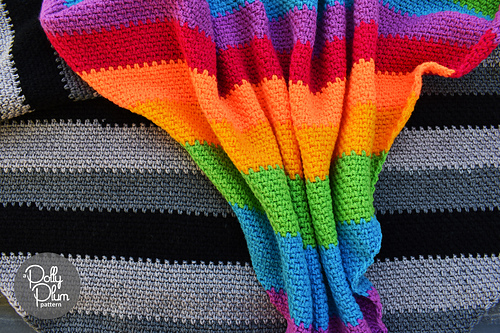
Find this pattern on HoneyBee
This pattern teaches corner-to-corner construction in moss stitch, working in squares or rectangles depending on your preference. The included video tutorial walks through the progression, making it accessible for beginners. It's gauge-flexible, so you can use any yarn weight you have on hand. The result is a dishcloth, blanket, or wall hanging that's substantial and reversible.
Modern Moss Stitch Blanket
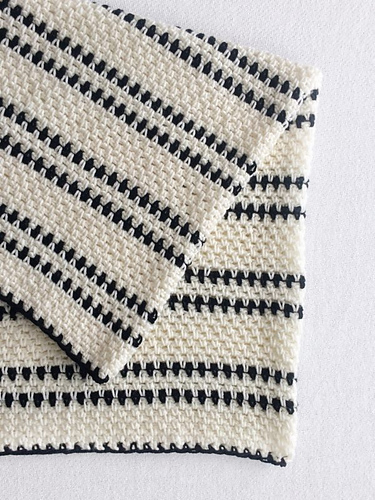
Find this pattern on HoneyBee
A rectangular blanket in aran yarn with room for colorwork or stripes, this pattern keeps things straightforward: straight rows of moss stitch until you reach your desired width. The simplicity means you can focus entirely on stitch consistency, and any tension work you do will be visible and rewarding. It's the kind of project you can work on while watching something, since there's no complex shaping to track.
Linen Stitch Manghan

Find this pattern on HoneyBee
This blanket is designed by a respected pattern writer and scales up beautifully. Linen stitch (another name for moss stitch) creates a fabric that's soft yet structured, perfect for a piece you'll actually use. The pattern includes both written instructions and photo tutorial support, and the rectangular shape makes it easy to adjust dimensions. Aran yarn means your project will complete relatively quickly.
Linen Stitch Baby Blanket

Find this pattern on HoneyBee
A tailored baby blanket in linen stitch that's softer than many textured pieces because of the yarn weight used. The pattern is flat-worked and includes a video tutorial to guide you through. Aran yarn still works beautifully for a baby gift, creating a durable, washable blanket that will last through multiple children. The rectangular shape means minimal shaping, and the density of the stitch means it'll hold up to frequent washing and use.
Rainbow Moss Stitch Blanket
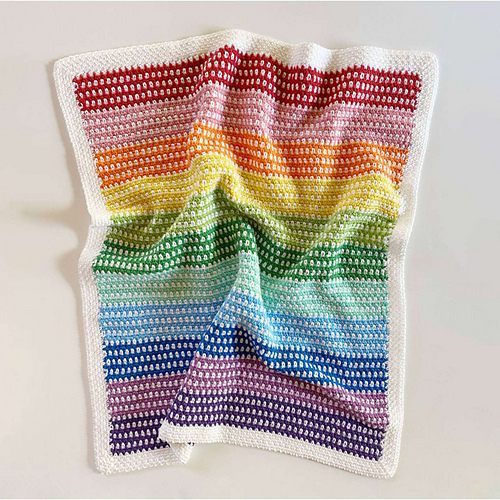
Find this pattern on HoneyBee
This blanket uses multiple colors in aran yarn to create a striped rainbow effect. The flat-worked construction with moss stitch means the finished piece is reversible, so both sides of your color transitions are equally attractive. A video tutorial guides you through color changes, and the one-piece construction means no seaming. It's an ambitious but achievable project for someone comfortable with moss stitch who wants to add a colorwork dimension.
Men's Granite Stitch Scarf

Find this pattern on HoneyBee
The granite stitch is a variation of moss stitch that creates an even denser, more structured fabric. This scarf pattern uses worsted-weight yarn and emphasizes the stitch's reversibility. It's charted as well as written, giving you flexibility in how you follow the pattern. The scarf is an excellent finishing piece that works as both a style statement and a genuinely functional accessory.
Moss Stitch In a Square Dishcloth

Find this pattern on HoneyBee
This square dishcloth is a foundational moss stitch project that moves beyond just rectangles. Working flat or in the round, you'll build a square that's perfect for kitchen use or as a gift. Worsted yarn works up quickly, and the small scale means you can complete it in just a few hours. It's ideal for testing color combinations before committing to a larger project.
Linen Stitch Dishcloth/Lovie

Find this pattern on HoneyBee
A smaller project in DK weight linen stitch that works up to a lovable size for a baby or toddler. The lighter yarn weight creates a softer drape than aran, making this good for items that will be held and cuddled. Photo tutorials guide you through the stripes and colorwork options. DK weight also means this is an affordable practice project.
Moss Stitch Fingerless Gloves

Find this pattern on HoneyBee
An intermediate-level project that uses moss stitch in a fitted accessory. Built from the bottom up in worsted yarn, these gloves are sized for an adult hand. The texture of moss stitch adds visual interest while maintaining stretch, so the gloves fit comfortably without a precise gauge. It's a good step up from flat projects because you're working in the round with shaping, but the straightforward stitch pattern means you can focus on fit.
Linen Stitch Ponytail / Messy Bun Hat

Find this pattern on HoneyBee
A clever hat design with an opening at the crown for a ponytail or messy bun. This pattern uses linen stitch in aran yarn and includes both written and video instructions. The seamless construction and ribbed cuff keep the hat fitted, while the textured stitch adds visual appeal. It's a practical pattern for someone wanting moss stitch practice with a wearable outcome.
C2C Moss Stitch Dishcloth

Find this pattern on HoneyBee
Another corner-to-corner variation that builds a practical dishcloth in worsted yarn. The bias direction created by C2C construction paired with moss stitch creates an interesting visual dynamic. Photo tutorials make the technique accessible, and the small scale means you can finish it quickly and move on to bigger projects, or make several to build up a set.
FAQ
What's the difference between moss stitch and linen stitch?
The terms are often used interchangeably, and both refer to the same basic structure: alternating single crochets and chain spaces. Some patterns use "moss stitch" for a two-row repeat and "linen stitch" to indicate a four-row pattern with slight variations, but in practice, most of the patterns you'll find use them to mean the same thing. Check the pattern's abbreviations section if you're unsure.
Can I use a different yarn weight for moss stitch?
Yes, absolutely. Moss stitch works in any yarn weight, though the final fabric's drape and feel will change. Sport and DK weights create delicate, drapey projects. Worsted and aran weights make sturdy, quick-to-finish pieces. Super bulky yarn produces a very open, blocky stitch. Start with what the pattern calls for, then experiment with other weights as you gain confidence.
Why does my moss stitch look uneven?
The two most common causes are tension and row counting. If your chain-1 spaces are much taller or shorter than your single crochets, try to equalize the height of both stitches. Additionally, if you occasionally work into a single crochet instead of a chain space, your rows won't align and the fabric will look bumpy. After each row, glance back to verify your stitch columns are stacking neatly.
Is moss stitch harder than single crochet?
No, it's actually just as easy once you understand the pattern. The only difference is that you're skipping stitches and working into chain spaces rather than individual stitches. The rhythm becomes automatic after a few rows, and the reversible, durable fabric you get in return makes it worth the tiny bit of extra focus.
What projects are best for moss stitch?
Moss stitch shines for items that need durability and a finished look on both sides: blankets, dishcloths, scarves, baby gifts, and home decor pieces. It's also wonderful for accessories like hats and cowls. The stitch's density means projects hold their shape, so they're reliable gifts and keep their appearance through many washes.
Ready to Get Started?
The moss stitch is your entry point to a whole category of textured, professional-looking crochet. Browse more beginner-friendly crochet patterns, explore blanket projects to find your next larger undertaking, or dive into one of the patterns above. Each one is an opportunity to build confidence and create something you'll actually use.
Happy crocheting!
More from the HoneyBee blog
Pattern round-ups, tutorials, and crafting inspiration from the HoneyBee community.
Read more articles