20 Free Knitting Patterns for Beginners That Actually Look Great
20 free knitting patterns for beginners that finish looking polished. Scarves, hats, socks, and a few simple sweaters chosen for the result, not just the level.
On this page26 sections▾
The mechanics of knitting come together faster than most people expect. A week of practice and you can knit and purl without looking at your hands. The harder part is finding a first pattern that you'll actually finish, that you'll actually wear or display, and that won't trip you up halfway through because it assumed a skill you haven't picked up yet.
The 20 free knitting patterns for beginners below are sorted by project type. Every pattern below uses only knit, purl, basic increases, basic decreases, and (for the in-the-round patterns) joining a circular needle. None of them require seaming techniques, lace charts, or short-row heels you'll meet for the first time mid-project.
Scarves and Cowls
The right entry point for most new knitters. Low stakes, useful object at the end.
Honey Cowl

Find this pattern on HoneyBee
Antonia Shankland's in-the-round cowl in DK weight. The textured surface comes from slipped stitches, which means you literally skip past some stitches without working them. Easier than it sounds. No seaming. You bind off and it's done.
GAP-tastic Cowl

Find this pattern on HoneyBee
Jen Geigley's bulky cowl. Knit and purl only, worked flat and seamed at the end. The bulky weight is the point: two evenings, a finished cowl, and your hands learn what a knit and a purl stitch look like at scale. Great first cowl if you want to feel progress fast.
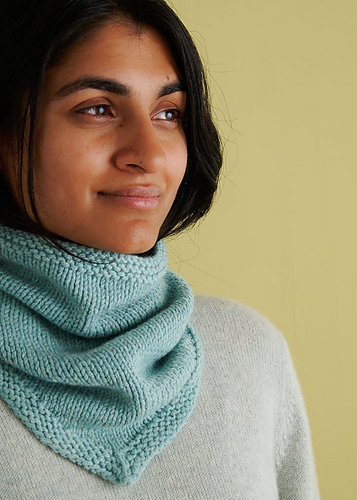
Bandana Cowl
Find this pattern on HoneyBee
Purl Soho. Aran weight, triangular shape from short rows. Short rows are just turning partway through and working back; you'll do this on purpose rather than by accident, but it's the same motion.
Big Herringbone Cowl

Find this pattern on HoneyBee
Also Purl Soho. Aran, herringbone stitch built entirely from knit and purl. Reversible, which is unusual for a textured stitch. The kind of project where you finish and immediately want to start a second one in a different color.
Hats
The first time you finish a hat that fits is unreasonably satisfying.
Classic Ribbed Hat

Find this pattern on HoneyBee
Purl Soho's reference beginner hat. DK weight, knit in the round, columns of knit alternating with columns of purl. That's the whole pattern. Add a stockinette band at the brim if you want it to roll. Works in any color and any DK yarn.
Sockhead Slouch Hat

Find this pattern on HoneyBee
Kelly McClure. Fingering weight, ribbed, slouchy. The finer yarn produces a more drapey finished fabric than the Classic Ribbed Hat above. Sized for several head measurements. If you have a hand-dyed fingering skein you've been afraid to commit, this is a pattern for it.
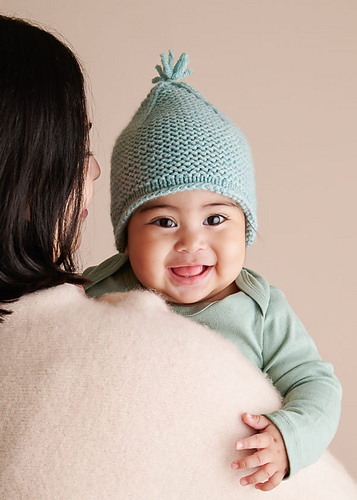
Garter Ear Flap Hat
Find this pattern on HoneyBee
Purl Soho, aran weight, garter stitch (knit every row). The ear flaps come from short rows. Add a pompom at the crown and contrasting earflap color and the finished hat reads as significantly more advanced than the techniques required.
Jason's Cashmere Hat

Find this pattern on HoneyBee
Melissa Thomson. Aran weight, cabled. The cables sound intimidating. They aren't. You slip a few stitches onto a cable needle, work the next stitches, then work the slipped ones. The reward-to-effort ratio on a first cabled hat is unbeatable.
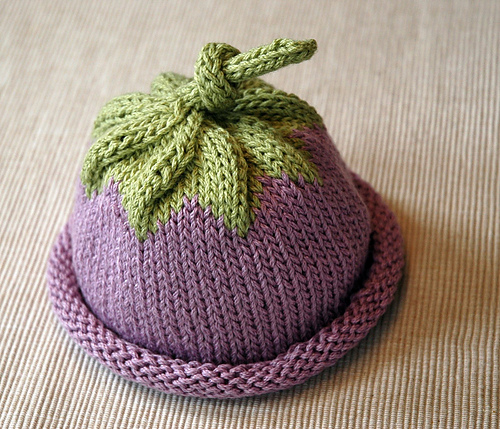
Berry Baby Hat
Find this pattern on HoneyBee
Michele Sabatier. Worsted, baby-sized, with simple stranded colorwork. Use it as your first colorwork project; the small circumference means you carry the second color for short stretches before changing colors back.
wurm

Find this pattern on HoneyBee
Katushika. Sport weight. The serpentine ridges on the surface come from a textured stitch pattern that's worth learning even if you never use this specific hat construction again.
Socks and Mittens
Socks are not as scary as their reputation. Mittens really aren't.
Hermione's Everyday Socks
Find this pattern on HoneyBee
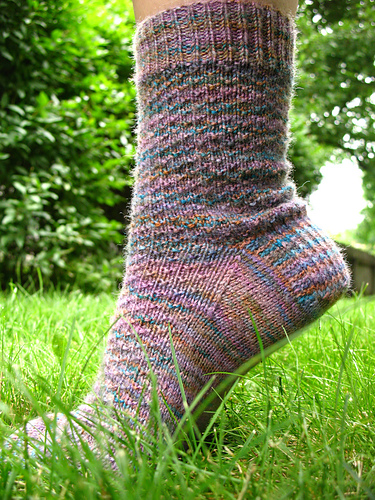
Erica Lueder's pattern is the one most knitters cite when asked about a first sock. Fingering weight, top-down, no seaming. It walks you through every component: ribbed cuff, leg, heel flap, heel turn, gusset, foot, toe. After a finished pair, you understand socks well enough to follow any pattern in the category. If you only do one project from this list, do this one.
The World's Simplest Mittens

Find this pattern on HoneyBee
tincanknits. Works at any yarn weight you have on hand; the pattern adjusts to your gauge. Knit, decrease, done. The thumb is a thumb hole left open and picked up later. If you've made a hat, you can make these.
Blankets
Knitted blankets drape differently than crochet ones — heavier on a per-stitch basis but with cleaner lines.
Ten Stitch Blanket

Find this pattern on HoneyBee
Frankie Brown. The blanket is built from a continuous strip of ten stitches that spirals outward, attaching to itself at the corners. Aran weight. Sounds gimmicky. Works beautifully. The format also means you never have a hundred stitches on the needle, which makes the project portable in a way blankets usually aren't.
Wearables
Garments that don't require fitting math.
Flax Worsted

Find this pattern on HoneyBee
tincanknits, top-down worsted-weight sweater. Pick up stitches at the armhole for sleeves, work them in the round, done. The pattern teaches you sweater architecture as you knit it: you'll come out the other side understanding how raglan increases work, why top-down construction wins for beginners, and what a schematic actually tells you. If you finish only one wearable from this list, this is the one.
Step by Step Sweater

Find this pattern on HoneyBee
Florence Miller. Worsted, in the round, with optional colorwork. Pattern instructions are unusually thorough at every step. Good companion or alternative to Flax.
Reyna

Find this pattern on HoneyBee
Noora Backlund. Triangular shawl in light fingering weight with a simple eyelet repeat. Your first lace project. The pattern is forgiving enough that you can finish with a few accidental yarn-overs and the finished shawl will still look right.
The Age of Brass and Steam Kerchief

Find this pattern on HoneyBee
Orange Flower Yarn. DK weight, small triangle scaled like a kerchief rather than a full shawl. Wear it tied at the neck, folded over the shoulders, or as a head scarf.
Simple Summer Tweed Top Down V-Neck

Find this pattern on HoneyBee
Heidi Kirrmaier. Aran weight, top-down, V-neck. A summer-weight wearable rather than the cold-weather sweaters above. The V-neck shaping is just working front and back at different lengths; no buttonholes, no picked-up neckband.
Boneyard Shawl

Find this pattern on HoneyBee
Stephen West. Triangle, DK weight, garter stitch with paired increases. The construction is simple enough that you can stop whenever the shawl is the size you want, which removes the "how much longer" anxiety that bigger projects produce.
Campside
Find this pattern on HoneyBee
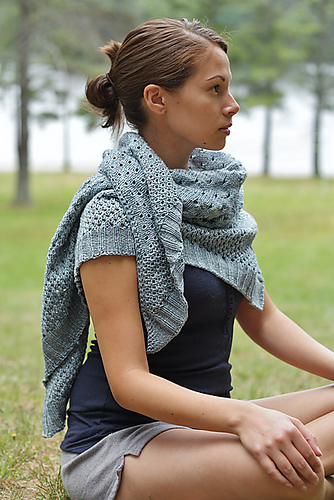
Alicia Plummer. DK weight shawl with charted colorwork and eyelets. Step up from Reyna. The colorwork chart is small enough to be approachable.
Tips for Beginner Success
Gauge swatches aren't optional for fitted items. For sweaters and socks, swatch in your yarn with your needles for at least 4x4 inches. Wash and dry it the way you'll wash and dry the finished garment. The pattern's sizing assumes the designer's gauge. If yours is off by half a stitch per inch, your sweater finishes two inches off across a 40-inch chest.
Read the pattern through before casting on. Five minutes. Spot the unusual abbreviations, identify the construction, note which techniques you've never done. The first time you encounter a "wrap and turn" should not be mid-row at 11 p.m.
Markers are not training wheels. Experienced knitters use them constantly. Mark the beginning of the round when you're knitting in the round. Mark each pattern repeat. Mark before increases. The five seconds you spend placing a marker saves you ripping back later.
Frog early when you spot a mistake. Ripping back four rows is annoying. Ripping back forty rows because you ignored a mistake is the project killer. Most knitters who quit a project quit because of a problem they noticed and didn't fix.
Metal circular needles glide faster than bamboo. Bamboo grips the yarn, which is helpful when you're new to keeping stitches on the needle, but you'll outgrow it. If you're investing in one set, get metal in a sharp tip (Addi Sock Rockets or ChiaoGoo Red Lace).
Browse all knitting patterns on HoneyBee, or filter by scarves, hats, blankets, or beginner difficulty.
More from the HoneyBee blog
Pattern round-ups, tutorials, and crafting inspiration from the HoneyBee community.
Read more articles