Free Knitted Sweater Patterns: 17 Designs from Beginner to Advanced
17 free knitted sweater patterns sorted by construction and difficulty. First-sweater picks, beginner cardigans, bulky oversized, and a few advanced challenges.
On this page27 sections▾
A first sweater changes how you think about knitting. The scarves and hats that came before were practice; the sweater is the thing the practice was for. After your first, you'll understand sweater construction well enough to read almost any pattern, modify for fit, and predict the finished garment from the schematic.
These 17 free knitted sweater patterns are sorted by construction and difficulty. The first three are the canonical first-sweater picks. The rest progress through beginner cardigans, bulky and oversized styles, textured pullovers, intermediate fitted work, and a couple of advanced challenges when you're ready for them.
zed](#bulky) 4. Textured Pullovers 5. Intermediate Sweaters 6. Advanced Sweaters 7. Sweater Knitting FAQs
Your First Sweater
Pick one of these three. They're the patterns most knitters point to when asked where to start.
Flax Worsted

Find this pattern on HoneyBee
tincanknits. Top-down raglan, worsted weight, seamless. The pattern walks you through the structural decisions as you make them, which means by the time you're past the underarm split you understand why the sweater is shaped the way it is. The standard recommendation for a first sweater for good reason.
Step by Step Sweater

Find this pattern on HoneyBee
Florence Miller. Aran weight, in the round, with optional colorwork. The pattern's instructions are unusually thorough; if you found Flax slightly too "trust me" in the construction notes, this one explains more.
The Weasley Sweater

Find this pattern on HoneyBee
Alison Hansel. Aran weight, with a large duplicate-stitched letter on the chest if you want it. Beginner-rated despite the duplicate stitch because the underlying sweater is plain stockinette. Pick this if you're making a gift and want personalization built in.
Beginner Cardigans
Cardigans add buttonholes and button bands to the first-sweater toolkit. Otherwise the construction is the same.
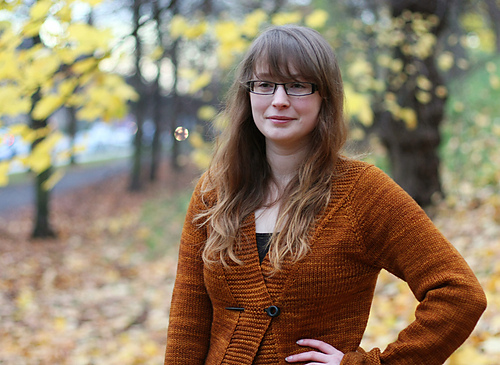
Harvest
Find this pattern on HoneyBee
tincanknits' cardigan companion to Flax. Worsted weight, top-down, button band picked up after the body is done. If you've made Flax, you can make Harvest the next weekend with one new technique (the button band).
Wren

Find this pattern on HoneyBee
Åsa Buchta. DK weight, fingerless-cardigan length, with patch pockets. The DK weight produces a finer drape than worsted; this is the cardigan you wear over a tank in early fall, not the one you wear over a long-sleeve in January.
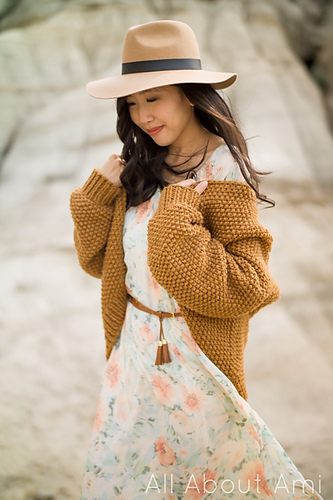
Woodbury Cardigan
Find this pattern on HoneyBee
Stephanie Jessica Lau. Bulky weight, oversized fit. Fast — bulky cardigans finish in roughly half the time of a worsted version because every row covers more inches.
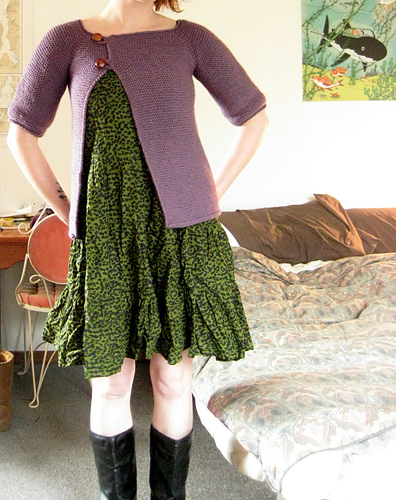
Garter Stitch Swingy Sweater
Find this pattern on HoneyBee
Jenn Pellerin. Aran weight, garter stitch throughout (every row knit). No purl stitches at all. Good pattern for someone who finds purling slow or uneven; the entire cardigan happens at your faster-knitting pace.
Bulky and Oversized
The fast-finish category. Bulky and aran weight on big needles.
Nimbus

Find this pattern on HoneyBee
The Berroco Design Team. Super-bulky weight, beginner-rated. The super-bulky is the point: this finishes in a weekend if you sit and knit. Useful as a last-minute gift project.
Shapely Boyfriend
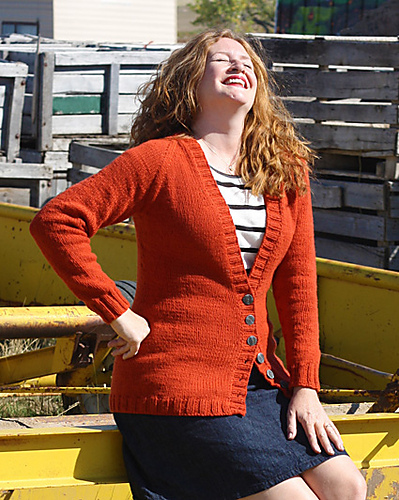
Find this pattern on HoneyBee
Stefanie Japel. Aran weight, top-down, with shaping at the waist that keeps the oversized fit from being shapeless. This is the pattern that taught me oversized doesn't have to mean rectangular.
Velvet Morning
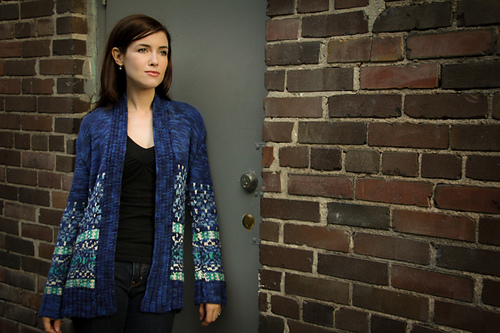
Find this pattern on HoneyBee
knittedblissJC. Aran, V-neck, slouchy. Intermediate rather than beginner; the V-neck shaping is the technical bit. Looks polished when knit in a hand-dyed semi-solid; less interesting in a flat solid color.
Textured Pullovers
Stockinette plus a stitch pattern. Adds visual interest without adding much complexity.
Anette Sweater in Seed Stitch

Find this pattern on HoneyBee
Sys Fredens. Worsted weight, all-over seed stitch. Seed stitch produces a stable fabric that doesn't curl, which is why this sweater holds its shape better than equivalent stockinette pieces. Slower than stockinette to knit because every other stitch is a purl.
Cross Creek
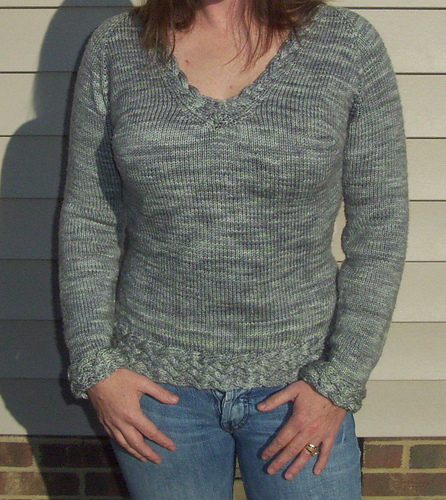
Find this pattern on HoneyBee
Trish Linehan. Worsted weight, textured stitch panels down the front and back. The texture is concentrated rather than all-over, so you knit fast through the stockinette sections and slow down for the panels.
The Handsome Chris Pullover

Find this pattern on HoneyBee
Caryn Shaffer. Worsted weight, drop-shoulder construction, intermediate-rated. A masculine-cut sweater that scales well to most adult bodies. If you've been knitting for partners or friends and want a pattern that isn't proportioned for a feminine frame, this is the one.
Intermediate Sweaters
February Fitted Pullover

Find this pattern on HoneyBee
Amy Herzog. Worsted weight with bust and waist shaping that creates an actual hourglass silhouette. This is the pattern that teaches you why fit matters: knit it once and you'll never go back to box-shaped sweaters. The shaping is straightforward once you understand the principle.
Oleander

Find this pattern on HoneyBee
Audrey Borrego. Sport weight, lace pullover. The lace pattern is charted; if you've avoided charts until now, this is the right scale to learn on because the chart is small enough to memorize after a few repeats.
Advanced Sweaters
Cable & Seed Stitch Jacket

Find this pattern on HoneyBee
Debbie Bliss. Aran weight, cabled jacket with seed-stitch background. The technical demand isn't the cables (those become rhythmic after the first repeat) but the simultaneous cable charts and shaping — keeping track of where you are on the chart while increasing or decreasing requires attention.
Finch Fairisle Sweater

Find this pattern on HoneyBee
Marie Wallin. Fingering weight, full Fair Isle colorwork. The fingering weight and the colorwork together mean this is a project measured in months rather than weeks. Worth it for the finished sweater, but go in with realistic timing expectations.
Sweater Knitting FAQs
What's the difference between top-down and bottom-up?
Top-down starts at the neckline. You knit downward, increasing for sleeves and body, and you can try on the work-in-progress whenever you want. Bottom-up starts at the hem and requires committing to a length before you start. Top-down is more forgiving for first sweaters; bottom-up is preferred by some knitters for the cleaner stitch direction.
What yarn weight should my first sweater be?
Worsted or aran. Worsted gives you the best balance between fast progress and clean stitch definition. Fingering and DK are slower; bulky finishes faster but the stitches are big enough to look chunky on tailored fits.
How do I know if my gauge is right?
Swatch in your yarn with the needles you'll use for the sweater. Knit 4x4 inches in the pattern's specified stitch (usually stockinette), wash and dry it the way you'll wash the finished sweater, then count stitches and rows per 4 inches. If you're off, change needle size — half a size for small adjustments, a full size for larger ones.
Browse all knitted sweater patterns on HoneyBee or filter by cardigan, pullover, or beginner difficulty.
More from the HoneyBee blog
Pattern round-ups, tutorials, and crafting inspiration from the HoneyBee community.
Read more articles