Free Knitted Sock Patterns: A Curated Collection for All Levels
16 free knitted sock patterns, from your first pair to advanced colorwork and unusual constructions. Yarn weight and construction notes for each.
On this page26 sections▾
Socks are the project knitters get hooked on. Small, portable, infinitely repeatable, and they live in a drawer rather than being displayed once a year. After your first pair, you understand sock anatomy well enough to read any sock pattern in the future. After your fifth pair, you have opinions about heel constructions and a strong preference for either cuff-down or toe-up.
These 16 free knitted sock patterns are sorted by construction approach. The reference beginner pattern at the top is the one to start with; the rest progress through cuff-down variations, toe-up patterns, textured and patterned socks, and a couple of specialty constructions.
Start Here: Your First Pair
Hermione's Everyday Socks
Find this pattern on HoneyBee
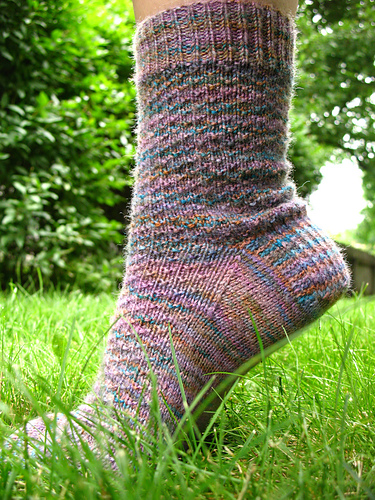
Erica Lueder. Fingering weight, top-down, heel flap construction with gusset. This is the pattern most knitters point to when asked about a first sock. The instructions walk through every component clearly: cuff, leg, heel flap, heel turn, gusset, foot, toe. Finish one pair and you have the architecture of socks in your hands.
Cuff-Down Basics
Basic Ribbed Socks

Find this pattern on HoneyBee
Kate Atherley. Fingering weight, all-over ribbing. The ribbing makes the finished sock more elastic than plain stockinette, which means one size fits a wider range of feet. Useful pattern if you're knitting socks as gifts and don't know exact measurements.
DK Weight Vanilla Socks

Find this pattern on HoneyBee
Crazy Sock Lady Designs. DK weight, traditional cuff-down construction. The DK weight is the trade-off: you finish faster than fingering, but the socks are thicker and won't fit inside most shoes. Treat them as house socks or boot liners.
Rye Sock

Find this pattern on HoneyBee
tincanknits. Fingering weight, garter and stockinette panels. Designed for the whole family — the pattern includes sizes from baby through adult. Good if you want to knit matching socks for the household.
Broken Seed Stitch Socks

Find this pattern on HoneyBee
Hanna Leväniemi. Fingering weight. Broken seed stitch produces a subtly textured fabric that's easier than seed stitch (which is purl-heavy) and reads more interesting than plain stockinette. Good first textured sock.
Blueberry Ribbed Waffle Socks

Find this pattern on HoneyBee
Sandy Turner. DK weight, waffle-textured rib. The waffle texture comes from a specific knit-and-purl arrangement; the technique transfers to other projects once you've made these.
Toe-Up Patterns
The advantage of toe-up: you can try the sock on while knitting, and you keep going until your yarn runs out rather than risking a too-short cuff.
I'm So Basic Socks

Find this pattern on HoneyBee
Summer Lee. Light-fingering weight, toe-up, magic loop. Comes with video tutorials, which is the right format for sock construction. If you've avoided toe-up because the toe cast-on is unfamiliar, the video makes it click.
Rose City Rollers

Find this pattern on HoneyBee
Mara Catherine Bryner. Fingering weight, toe-up, with an unfinished rolled top instead of a ribbed cuff. The rolled top means no ribbing fatigue at the end of the project. Good first toe-up if traditional cuffs slow you down.
Business Casual

Find this pattern on HoneyBee
Tanis Lavallee. Fingering weight, toe-up, ribbed pattern. Cleaner aesthetic than the typical handknit sock — closer to commercial dress sock proportions, suited to wearing inside shoes.
Textured and Patterned Socks
Monkey Socks

Find this pattern on HoneyBee
Cookie A. Light-fingering weight, lace and twist-stitch panels. One of the most-knit sock patterns ever published. The lace repeat is small enough to memorize after the second or third repeat. A reasonable first lace project despite the design's reputation.
Simple Skyp Socks

Find this pattern on HoneyBee
Adrienne Ku. Sport weight. The "skyp" stitch creates a diagonal-line texture that looks woven. Sport weight is faster than fingering but still fits in most shoes.
Owlie Socks

Find this pattern on HoneyBee
Julie Elswick Suchomel. Intermediate, fingering weight, with cable owls running up the leg. The owl motif is the centerpiece; the rest of the sock is straightforward stockinette. Good first cable-on-socks project because the cables are concentrated in one panel rather than all-over.
Themed and Specialty Socks
Skew
Find this pattern on HoneyBee
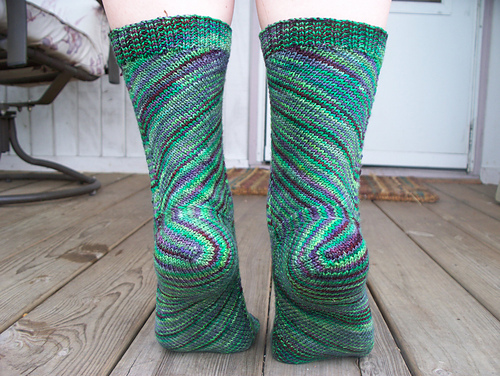
Lana Holden. Intermediate, fingering weight. Diagonal construction — the sock is knit at an angle so the stitch grain spirals around the foot. The construction is the point; once you understand how the angles work, you understand a different way of thinking about sock geometry.
Tiny Tree Socks
Find this pattern on HoneyBee
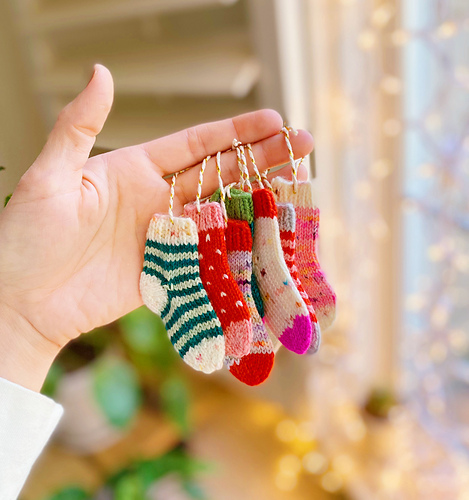
Summer Lee. Fingering weight, with small evergreen-tree colorwork motifs scattered up the leg. The motifs are small enough that float management is straightforward; useful first stranded-colorwork sock.
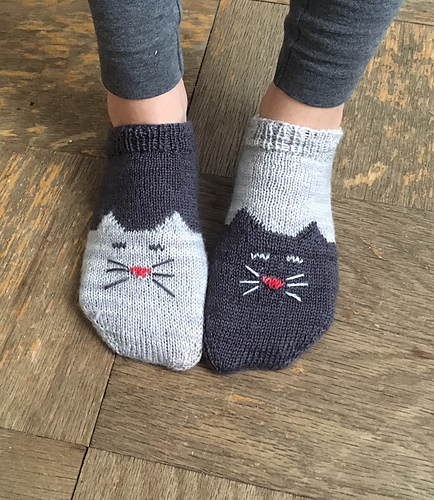
Kitty Ankle Socks
Find this pattern on HoneyBee
Inorgaknit. Fingering weight, ankle length, with cat-themed details. Short leg means a faster project than full-height socks; useful if you want to finish a pair in a long weekend.
Weekend Shorty Socks

Find this pattern on HoneyBee
Summer Lee. Fingering weight, ankle socks with no-show or barely-show length. Use this pattern when you want socks for inside athletic shoes or loafers. Faster than full-length, same techniques.
Sock Knitting FAQs
What yarn weight is best for socks?
Fingering. Sock yarn is its own category for a reason: tight gauge, durable plied construction, often with nylon for wear resistance. Sport works for thicker indoor socks. DK works for boot liners and house socks but not for shoes you wear daily. Worsted is bulky enough that the socks don't fit inside most footwear.
Cuff-down or toe-up?
Try both, pick the one that fits your brain. Cuff-down knitters like committing to a sock at the cast-on. Toe-up knitters like the freedom to keep going until they're out of yarn. Neither is technically better; they produce equivalent finished socks.
How much yarn does one pair use?
400 to 500 yards of fingering for an adult medium. Check your pattern's specifics. If you're close on yardage, knit toe-up so you can stop when the yarn runs out rather than starting over.
What's the deal with reinforcement?
Heels and toes get the most wear. Reinforce by holding a strand of nylon thread alongside your working yarn through the heel flap and toe decreases. The reinforcement is invisible and roughly doubles the life of the socks.
Browse all sock patterns on HoneyBee or filter by knitting or beginner.
More from the HoneyBee blog
Pattern round-ups, tutorials, and crafting inspiration from the HoneyBee community.
Read more articles