
Free Knitted Scarf Patterns: 14 Styles from Simple to Showstopping
14 free knitted scarf patterns from one-row beginners to lace and reversible cables. Yarn weight and skill notes for each.
On this page24 sections▾
A scarf is the most repeatable project in knitting. You make one, learn what you'd do differently, then make another with the changes. By the third or fourth one, you have a sense for which constructions you like and which you don't. These 14 free knitted scarf patterns span the range: beginner stitch repeats you can knit on autopilot, cabled and textured pieces that require attention, lace patterns that look harder than they are, and a few triangular shapes for variety.
Beginner Basics
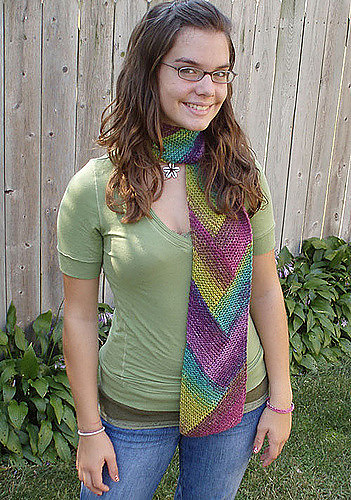
Pioneer Braid Scarf
Find this pattern on HoneyBee
Catherine Ryan. Worsted weight, beginner-rated. A textured stitch pattern that looks braided across the surface. The technique is just knit and purl arranged carefully, no actual cables.
No-Purl Ribbed Scarf

Find this pattern on HoneyBee
Purl Soho. Aran weight. The trick is that you knit every stitch, but you alternate between knitting through the front and back loops to create the ribbed appearance without ever purling. If purling is slow for you, this pattern doubles your speed.
One Row Handspun Scarf

Find this pattern on HoneyBee
Stephanie Pearl-McPhee. Worsted weight. A single repeating row, designed to showcase variegated or hand-dyed yarn. No counting, no tracking — knit until the scarf is the length you want.
Saroyan
Find this pattern on HoneyBee - Saroyan
L. Abinante. Worsted weight. Asymmetric leaf-edge construction; technically a small shawl but worn primarily as a scarf. The leaf motifs along one edge are formed by yarn-overs and decreases. Looks more advanced than it is.
Cabled and Textured
Irish Hiking Scarf

Find this pattern on HoneyBee
Adrian Bizilia. Worsted weight, classic three-cable scarf with seed stitch borders. This is the reference cable scarf — if you ever wonder "what should my first cable project be," it's this one. The cables are simple two-over-two crosses repeated up the length.
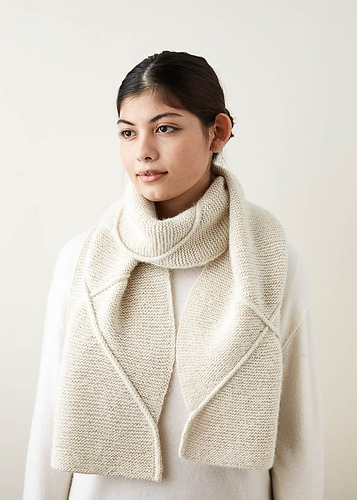
Delicate Cable Scarf
Find this pattern on HoneyBee
Purl Soho. Worsted weight, finer cable detail than the Irish Hiking. Use a smooth plied yarn so the cables read clearly; tweed or single-ply yarns muddy the definition.
Meadow Vine Reversible Cable Scarf

Find this pattern on HoneyBee
Kristen McDonnell. Bulky weight. Reversible means both sides of the scarf look intentional — useful for scarves that flip around the neck. The bulky weight finishes the project fast.
Lace and Openwork
One Row Lace Scarf

Find this pattern on HoneyBee
Turvid. Fingering weight. A four-stitch repeat over one row. If you've avoided lace because of charts and counting, this is the introduction: you memorize the single row in ten minutes and never look at the pattern again.
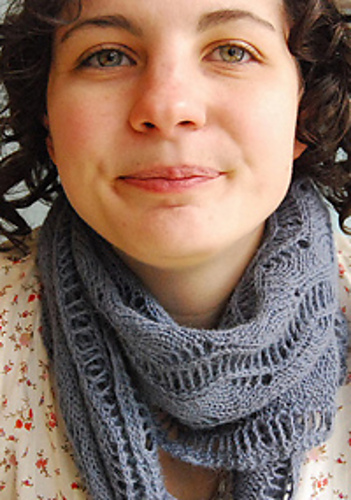
Lace Ribbon Scarf
Find this pattern on HoneyBee
Veronik Avery. Fingering weight, narrow scarf with a central lace ribbon. The lace section is small enough that mistakes are easy to spot and fix without ripping the whole row.
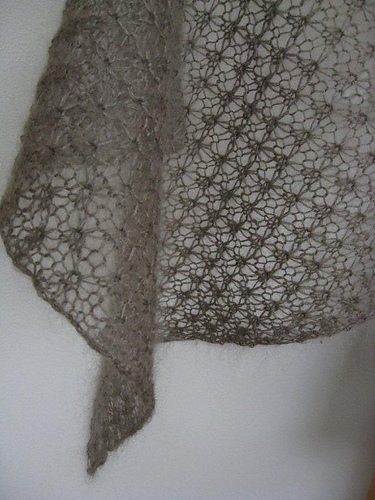
Horai Scarf
Find this pattern on HoneyBee
Hiroko Fukatsu. Lace weight. The fine yarn is what makes this scarf drape; the same pattern in worsted would feel stiff. Slow to make but light to wear.
Colorwork and Stripes
ZickZack Scarf

Find this pattern on HoneyBee
Christy Kamm. Fingering weight, chevron-stripe construction. Two-row color repeats, so the color changes are simple to manage. Looks complex; isn't. Good showcase for two contrasting fingering skeins.
Noro Striped Scarf

Find this pattern on HoneyBee
Jared Flood. Aran weight, alternating colors with two long-color-repeat skeins. The pattern is famous because the long color changes in the recommended yarn produce unpredictable stripe combinations that look planned. Works with any two skeins of self-striping yarn.
Triangles and Crescents
Lacy Baktus
Find this pattern on HoneyBee
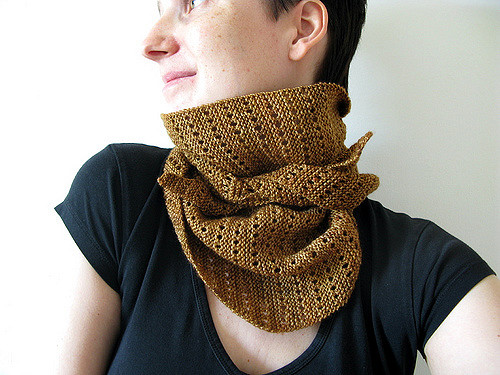
Terhi Montonen. Fingering weight. Triangular scarf knit on the bias with a lace edge. The construction means you can stop whenever the scarf is the size you want; no fixed dimensions.
Springtime Bandit

Find this pattern on HoneyBee
Kate Gagnon Osborn. Aran weight, kerchief-sized triangle. Wear it tied at the neck rather than draped over the shoulders; the smaller scale suits that style.
Ginkgo Crescent
Find this pattern on HoneyBee
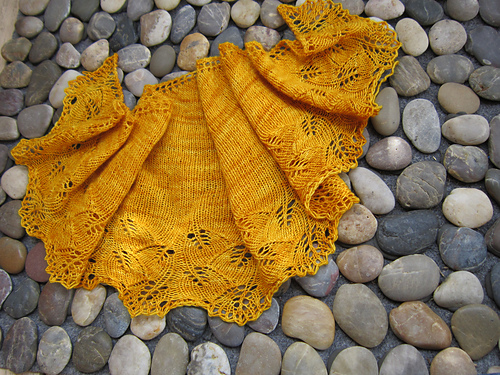
Jade Keaney. Fingering weight, crescent-shaped shawl-scarf. The crescent shape drapes over the shoulders better than a triangle. The leaf motif at the edge is what carries the design.
Scarf Knitting FAQs
What yarn weight should a scarf be?
Worsted is the default workhorse: warm enough for winter, fast enough to finish, and forgiving to knit. Fingering and sport weights produce lighter scarves better suited to layering or transitional weather. Bulky and super-bulky finish fastest but the stitches read big, which doesn't suit lace or fine cable detail.
How long should a scarf be?
For tying once at the neck, around 60 inches. For wrapping twice and tucking, 72 to 80 inches. Shorter than 50 inches reads as a scarflet and may not stay tied. Measure a scarf you actually wear and use that as the target.
How do I prevent stockinette from curling?
Use a non-curling stitch instead (garter, seed, ribbing), add at least three stitches of garter on each edge, or work the entire scarf in a stable stitch pattern. Blocking helps but won't fully prevent curling on plain stockinette.
Browse all knitted scarf patterns on HoneyBee or filter by knitting or beginner.
More from the HoneyBee blog
Pattern round-ups, tutorials, and crafting inspiration from the HoneyBee community.
Read more articles