15 Free Knitted Cardigan Patterns That Look Store-Bought
15 free knitted cardigan patterns sorted by silhouette: oversized, fitted classic, cropped modern. Yarn weight and construction notes for each.
On this page20 sections▾
A handknit cardigan is the most useful single garment you can finish. Worn over a tee, over a dress, over the same pajama top three days running. Layered or solo. Buttoned or open. The construction problem is well-solved at this point — most modern cardigan patterns are top-down and seamless, which means trying it on as you go is built into the workflow.
These 15 free knitted cardigan patterns are sorted by silhouette: oversized and cozy, fitted classic, cropped modern. Yarn weights range from super-bulky (finished in a weekend) to fingering (finished over a few months). Construction notes call out where the technical step-up is, so you can pick by what you want to learn next.
zed and Cozy](#oversized)
Oversized and Cozy
Baby Sophisticate

Find this pattern on HoneyBee
Linden Down. Aran weight, top-down, seamless. Despite the name, the pattern's adult sizes are the most-knit version. Beginner-rated. The aran weight finishes in roughly two weeks of evening sessions.
Shalom Cardigan

Find this pattern on HoneyBee
Meghan McFarlane. Bulky weight, top-down, with a circular yoke worked in twisted-stitch texture. The twisted stitches build the ribbed appearance without explicit ribbing. Good first textured cardigan; the texture is concentrated in the yoke rather than running through the body.
Aidez

Find this pattern on HoneyBee
Cirilia Rose. Super-bulky, intermediate, bottom-up and seamed, with a cabled front panel. The cables read clearly at this yarn weight, which is the trade-off: you commit to chunky-knit aesthetics. Looks tailored despite the relaxed A-line.
Iced

Find this pattern on HoneyBee
Carol Feller. Super-bulky, top-down, seamless. Waist shaping comes from short rows rather than from waist decreases, which is unusual and worth learning. The fast yarn weight means the short-row technique gets practiced repeatedly in a short timeframe.
Fitted and Classic
Harvest
Find this pattern on HoneyBee
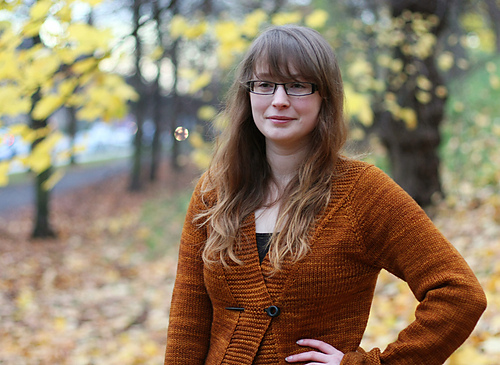
tincanknits. Worsted weight, top-down, seamless, photo tutorial. The reference beginner cardigan. If you've made tincanknits' Flax pullover and want the cardigan equivalent, this is it. Same construction logic with a button band added.
Puerperium Cardigan

Find this pattern on HoneyBee
Kelly van Niekerk. DK weight, top-down, beginner. DK splits the difference between fast worsted and refined fingering; the resulting fabric works for spring, fall, and indoor winter wear. Buttonholes worked inline rather than picked up after.
Seamless Yoked Sweater

Find this pattern on HoneyBee
Carole Barenys. DK weight, circular yoke worked top-down with slip-stitch texture in the yoke section. The slip-stitches read as colorwork-adjacent — visual interest without managing two strands.
Maile Sweater
Find this pattern on HoneyBee
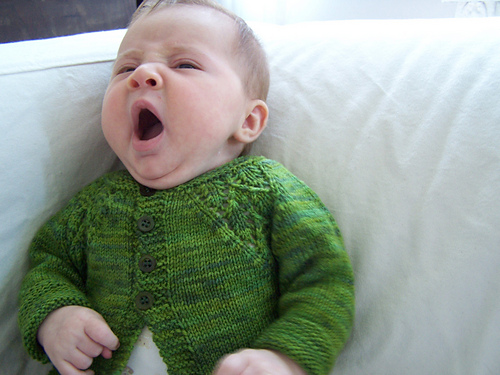
Nikki Van De Car. Fingering weight, intermediate, bottom-up and seamed, all-over lace. The fine yarn and lace produce a cardigan that drapes more like a knitted blouse than a winter sweater. Best in lightweight wool or cotton-silk blends.
Maja Cardigan

Find this pattern on HoneyBee
Hélène Magnússon. Aran weight, intermediate, bottom-up in the round with a stranded-colorwork yoke. The colorwork is concentrated in the yoke, so you knit miles of plain stockinette for the body and then the design happens in a contained section.
Cropped and Modern
Ballerina Wrap Top

Find this pattern on HoneyBee
Alexandra Tavel. DK weight, intermediate, one-piece seamless with i-cord edges and a tie closure. Cropped wrap silhouette — closer to a shrug than a full cardigan. Pairs well with high-waisted bottoms.
Paulie
Find this pattern on HoneyBee
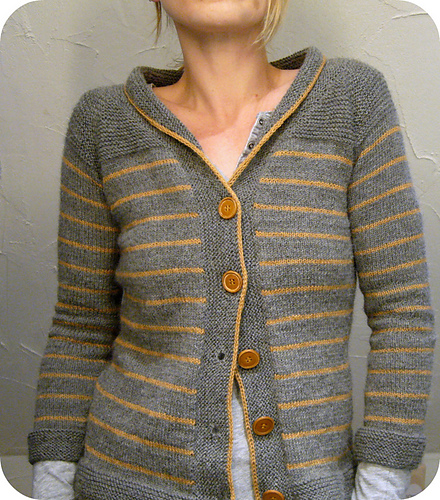
Isabell Kraemer. Fingering weight, beginner, top-down with short-row shaping and stripes. The fingering weight is what gives the finished cardigan its drape; this is a piece you wear inside, not as outerwear.
Caramel
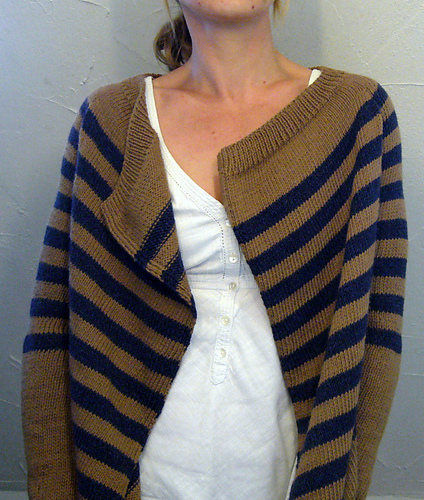
Find this pattern on HoneyBee
Also Isabell Kraemer. DK weight, top-down, seamless. The DK companion to Paulie if fingering is too slow but you want the same designer's silhouette. Striped construction without colorwork charts.
Sunnyside
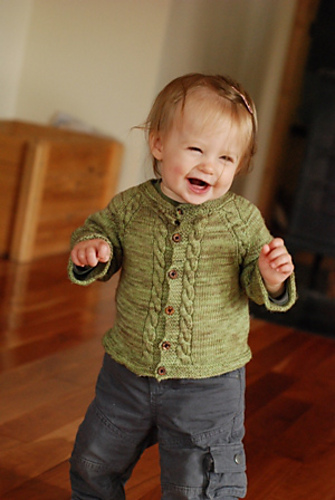
Find this pattern on HoneyBee
Tanis Lavallee. Fingering weight, top-down, minimal styling. The pattern keeps everything stripped down: stockinette body, buttoned front, no texture, no colorwork. The fingering weight does the design work.
Garter and Texture-Focused
Garter Stitch Baby Cardigan

Find this pattern on HoneyBee
Joji Locatelli. Fingering weight, asymmetric construction, bottom-up. The pattern is published as a baby cardigan but the proportions work for older children and small adults. Wrap-style closure rather than buttons.
Garter Yoke Baby Cardi

Find this pattern on HoneyBee
Jennifer Hoel. Sport weight, top-down, seamless. Garter texture in the yoke transitioning to stockinette below. The garter section is faster than equivalent stockinette for many knitters because both rows are knit, no purling.
Tips for Cardigan Success
Swatch in the stitch you'll use. Cardigans live or die by gauge. Knit a 4x4 inch swatch in the pattern's specified stitch (usually stockinette), wash and dry it the way you'll wash the finished cardigan, then measure. If you're off by half a stitch per inch, your size 38 will finish at 36 or 40.
Try on at every milestone. Top-down cardigans let you try on after the yoke, after the underarm split, at the waist. Use scrap yarn to thread the live stitches off the needles, slip the cardigan on, check the fit, slip the stitches back. Five minutes of this saves rip-back hours later.
Buttonholes worked inline beat picked-up button bands. Most modern patterns work the buttonholes as you knit the front edge, in stockinette or moss-stitch. The alternative — picking up stitches for a button band after the body is done — is harder to keep flat and tends to flare.
Block before sewing on buttons. A blocked cardigan will tell you the actual finished dimensions and where the buttons need to sit. Sewing buttons onto an unblocked cardigan locks in wrong spacing.
Wool blocks better than acrylic. If the cardigan's design depends on opening up after blocking (lace, twisted stitches, cable definition), wool is the right fiber. Acrylic doesn't relax in water the way wool does. Substitute fibers within the same category, not across them.
Browse all cardigan patterns on HoneyBee or filter by knitting, wearables, or beginner.
More from the HoneyBee blog
Pattern round-ups, tutorials, and crafting inspiration from the HoneyBee community.
Read more articles