How to Find Free Knitting and Crochet Patterns You Can Trust
A complete guide to finding quality free knitting and crochet patterns online: where to search, how to evaluate, and red flags to avoid.
On this page26 sections▾
Free knitting and crochet patterns are everywhere. The problem isn't scarcity-it's abundance. With millions of patterns available online, how do you identify the ones that are actually well-written, accurately tested, and a good match for your skill level? How do you avoid patterns with confusing abbreviations, missing stitch counts, or photos that don't match the finished project? And how do you find designers who stand behind their work?
The difference between a frustrating knitting experience and a rewarding one often comes down to pattern quality. This guide teaches you where to look, what questions to ask, and which red flags signal a pattern to skip. Whether you're a brand-new knitter seeking beginner patterns or an intermediate crocheter looking for something ambitious, these strategies will help you find designs you can genuinely trust.
Where to Find Free Patterns
Good free patterns live in several places, each with different advantages. Start by exploring multiple sources and see which ones match how you like to discover and work through patterns.
Pattern aggregators like HoneyBee organize thousands of free patterns in one place with consistent tagging and search. You can filter by craft, project type, difficulty, yarn weight, and yardage. Aggregators make discovery easy-one search gives you dozens of options instead of scattered results across dozens of blogs.
Designer websites and blogs are where you find patterns directly from creators. Many independent designers offer patterns freely to build an audience. The advantage is direct access to the designer if you have questions. The disadvantage is that patterns are scattered across different sites with inconsistent organization.
Community platforms like knitting circles, Reddit, Discord servers, and online communities offer pattern recommendations from actual makers. These communities provide honest feedback about whether a pattern worked, and they offer support as you're working through it.
Video resources on YouTube teach patterns visually, which helps if you're a visual learner or learning a complex technique. Video tutorials show process step-by-step, but they're time-consuming and harder to reference back to than written patterns.
Most experienced crafters use multiple sources. You might discover patterns through an aggregator, save patterns from favorite designers' websites, and get recommendations from your knitting circle. The combination creates a robust collection of trusted sources.
What Makes a Good Pattern
Not all free patterns are equal. Here's what separates trustworthy patterns from ones that will frustrate you.
Clear, detailed instructions are essential. A good pattern explains not just what to do, but why. Abbreviations are defined. Complex techniques are linked to tutorials or explained step-by-step. When you read the pattern, you should feel confident about what you're supposed to do.
Accurate photos show the actual finished project from multiple angles. If photos are blurry, poorly lit, or don't match the pattern description, that's a red flag. Compare photos to the pattern notes. Does the colorwork look right? Does the fit match what the pattern promises?
Gauge information is critical. Every pattern should state stitches and rows per inch, so you know whether your yarn and needles are appropriate. Patterns without gauge information are often untested.
Clear material specifications including total yardage, yarn weight, needle/hook size, and special materials (buttons, stitch markers, notions) should be easy to find. You should understand what you need at a glance.
Designer responsiveness matters. Look for patterns where the designer answers questions in comments, includes an FAQ addressing common issues, or posts errata if mistakes are found. This signals that the designer cares about the pattern working well.
Finished object photos from other makers are your best evidence that a pattern actually works. Look at reviews and photos shared by people who've made it. If most finished projects look great and people are satisfied, the pattern is probably solid.
Test knitters or crocheters signal higher quality. Professional designers use test knitters to catch mistakes before release. Free patterns from established designers have often been tested; patterns from new designers might not be.
Evaluating Pattern Quality
Not all free patterns are created equal. Here's what to look for when evaluating whether a pattern is trustworthy.
Clear Instructions
Good patterns include unambiguous, step-by-step instructions. They explain not just what to do but why. Abbreviations are defined. Techniques are explained or linked to tutorials. If you read through the pattern and feel confused, move on.
Accurate Photos
The pattern should include photos of the finished project. Ideally multiple angles showing how it actually looks. If the photos are blurry, poorly lit, or suspiciously dissimilar to the pattern description, that's a red flag. Compare the finished photo to pattern notes-does the colorwork match? Does the fit look right?
Gauge Information
Every pattern should include gauge information (the number of stitches and rows per inch). This is how you'll know if your yarn and needles are appropriate. Patterns without gauge information are often poorly tested.
Yardage and Materials
The pattern should clearly state total yardage needed, yarn weight, needle or hook size, and any special materials (buttons, stitch markers, etc.). You should be able to understand material requirements at a glance.
Designer Responsiveness
Look for patterns where the designer is responsive in comments, has an FAQ section addressing common questions, or posts errata if mistakes are found. A pattern with 50 comments where the designer has answered questions is often more trustworthy than a pattern with no comments.
Finished Object (FO) Photos from Other Makers
If the pattern is popular, other crafters will have made it and shared photos. These real-world finished projects are your best evidence that the pattern actually works. Look for reviews and photos from real makers. If most of them look great, the pattern is probably solid.
Test Knitters
Professional pattern designers often use test knitters-people who make the pattern before it's released to catch mistakes and suggest clarifications. Patterns that mention being tested are generally higher quality. Free patterns from established designers often have been tested; patterns from new designers might not be.
Red Flags
Skip patterns with these warning signs:
No gauge information is a major red flag. Gauge determines whether your finished project will be the intended size. Without it, you're guessing, and the pattern was likely untested.
Photos that don't match the pattern description signal carelessness. If the pattern promises a "fitted sweater" but photos show something oversized, something's wrong. If colorwork doesn't match the schematic, the pattern wasn't carefully reviewed.
Unclear or undefined abbreviations suggest sloppy writing. Knitting and crochet have standard abbreviations. If a pattern invents non-standard ones without clear definitions, it's a sign the designer didn't carefully edit their work.
Vague instructions are frustrating. Patterns should be specific about techniques, shaping, and finishing. Vague patterns are usually untested or written by someone still learning to write patterns clearly.
No way to contact the designer is a problem. If you have questions and there's no email, comment option, or way to reach the designer, you're stuck. Good designers make themselves accessible.
Aggressive paywalls or barriers to access free patterns-multiple surveys to complete, forced newsletter signups, constant ad interruptions-are annoying and sometimes feel exploitative of designer work.
Pattern Examples
Here are six patterns that illustrate what good free patterns look like. Each is beginner or early-intermediate, and each exemplifies the quality markers we've discussed.
Hermione's Everyday Socks
Find this pattern on HoneyBee
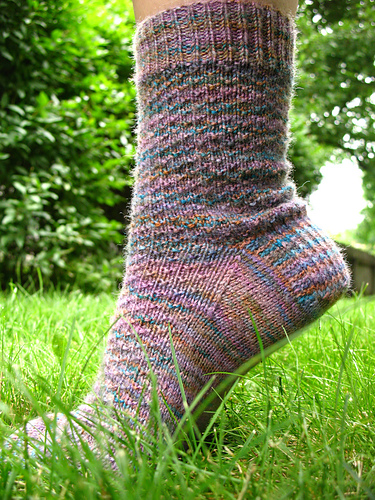
Erica Lueder's sock pattern is an excellent example of beginner-friendly instruction. The pattern includes clear gauge, yarn weight specifications, and step-by-step construction. The written instructions are detailed, and the finished photos show exactly what you're working toward. This pattern has thousands of positive experiences, so you can trust that it works. If you're new to sock-knitting, this is a safe choice.
Step by Step Sweater

Find this pattern on HoneyBee
Florence Miller's sweater earns its name. Every step is explained clearly, with schematics showing exactly what the finished sweater should look like. The pattern includes gauge, yardage, and clear abbreviations. This is an ideal first-sweater pattern for a beginner who's ready to tackle garment construction.
Flax Worsted

Find this pattern on HoneyBee
tincanknits' Flax is known for clear instruction and beautiful schematic diagrams. The worsted weight means this knits up quickly, and the photo tutorial included with the pattern makes techniques crystal clear. This pattern demonstrates what happens when a designer cares deeply about their pattern working well for everyone.
Reyna

Find this pattern on HoneyBee
Noora Backlund's triangular shawl shows how good designers approach larger projects. Despite being an intermediate pattern, the instructions are accessible. The schematic is clear, abbreviations are standard, and the finished photo shows exactly what you're aiming for. Finished object photos from hundreds of makers show that this pattern genuinely works.
The Age of Brass and Steam Kerchief

Find this pattern on HoneyBee
Orange Flower Yarn's kerchief is a beginner-friendly shawl that teaches lace knitting. The pattern includes clear gauge, DK weight specifications, and charted lace sections. The finished photos show beautiful drape and stitch definition. This is a perfect pattern for someone ready to learn lace.
Honey Cowl

Find this pattern on HoneyBee
Antonia Shankland's cowl is a beginner project that teaches texture and slipped stitches. The pattern is straightforward-a few stitches, repeating pattern, quick completion. Finished objects from makers show consistent, beautiful results. This is an ideal first-texture pattern.
Building Your Collection
As you find patterns you trust, organize them for easy access later.
Save patterns to HoneyBee where you can tag them by project type, difficulty, and season. Keep a spreadsheet or Pinterest board of patterns you've heard great things about, with notes about materials needed, estimated time, and difficulty. When you discover a designer whose work you love, follow them on social media or subscribe to their newsletter-new patterns often release there first.
Join knitting and crochet communities. Being active in these spaces means constant exposure to new patterns and honest recommendations from people like you. These communities also offer support when you're working through a pattern and questions arise.
FAQ
Is free always lower quality than paid?
No. Some of the best patterns available are completely free. Professional designers offer free patterns to build audiences or as introductions to their work. Quality depends on the individual pattern and designer, not the price.
How do I pick a pattern for my skill level?
Beginners should choose patterns with basic stitches and straightforward shaping. Intermediate patterns might include colorwork or complex shaping. Advanced patterns have intricate techniques, multiple complex elements, or unusual construction. Be honest about your skill level-it's fine to work up to more complex patterns, but frustration happens when you skip steps.
What if I find an error in a free pattern?
Contact the designer respectfully, explain the error, and offer to help test corrections. Most designers appreciate feedback and will update their pattern. If they don't respond and it's really broken, leave a review noting the error so other makers know.
Should I follow designers based on aesthetic alone?
Absolutely. If you love a designer's style, follow them. You'll build a cohesive collection that reflects your taste. This is smart strategy for creating a wardrobe or collection of pieces you'll actually use repeatedly.
Which aggregator site is best?
Try different ones and see which feels intuitive. HoneyBee is excellent for curated discovery and community. You might use different sites for different purposes. The best site is the one you actually use regularly.
Keep Exploring
The world of free knitting and crochet patterns is genuinely generous. Thousands of designers share work freely because they love the craft. Trust that generosity, but also trust your instincts about which patterns will work for you.
Browse thousands of free knitting and crochet patterns on HoneyBee filtered by project type, skill level, yarn weight, and time commitment. Create an account to save favorites, track projects, and share finished photos. Your makes inspire others to try new patterns and trust designers who put care into their work.
More from the HoneyBee blog
Pattern round-ups, tutorials, and crafting inspiration from the HoneyBee community.
Read more articles