
Crochet Stitch Guide: Learn 9 Beautiful Stitches with Tutorials
Master 9 essential crochet stitches: ribbed, bobble, moss, shell, wave, cable, basketweave, granny, and lace. Includes techniques and 20+ patterns to practice each stitch.
On this page17 sections▾
Learning new crochet stitches opens up a whole universe of patterns and possibilities. Whether you're moving beyond single crochet or ready to tackle textured stitches, understanding the mechanics of each stitch makes following patterns easier and helps you troubleshoot when something doesn't look right. A crochet ribbed stitch creates fabric with depth and structure, while bobble stitches add dimensional texture. Lace stitches create open, airy fabric perfect for summer garments, and granny squares have earned their place as timeless building blocks. This guide walks through nine essential stitches with practical tips for each one, plus patterns to help you practice and build confidence.
Ribbed Stitch
The ribbed stitch creates a vertical texture that looks similar to knit ribbing. It's made by working back post double crochet and front post double crochet stitches in alternating columns. This stitch adds structure to fabric without bulk, making it perfect for hats, cowls, and garment edgings where you want warmth with a fitted feel.
The ribbed stitch works up faster than you'd expect, and the vertical lines are visually forgiving. Even if your tension shifts slightly, the fabric still looks intentional. It's particularly effective in solid colors where the texture can really shine.

Find this pattern on HoneyBee
This beginner-friendly hat by Sarah Arnold combines front post and ribbed stitches for texture and structure. The top-down construction means you can try it on as you go and stop when it feels the right length. Worsted weight yarn works up quickly, making this a satisfying weekend project even for newer crocheters. The textured fabric drapes nicely and holds its shape through washing.

Find this pattern on HoneyBee
Kirsten Holloway's beanie demonstrates how ribbed stitches create a polished, fitted hat. Written for beginners, this one-piece pattern works from the top down in worsted weight, finishing in an afternoon. The vertical ribbed texture means the hat stretches to fit without losing shape. Perfect for someone wanting to understand how post stitches work before diving into more complex stitch combinations.
Bobble Stitch
Bobble stitches (sometimes called popcorn or nupp stitches) create 3D dimensional texture. You build multiple stitches in one stitch, then pull the working yarn through all of them at once to create a knot-like bump. These are fun but require focus, as accidentally dropping a loop means starting that bobble over.
Bobble stitches work beautifully in blankets where the texture adds interest and the slowing pace of the stitch is meditative. They're less common in garments because they add bulk, but a few scattered bobbles can add character without overwhelming the piece.

Find this pattern on HoneyBee
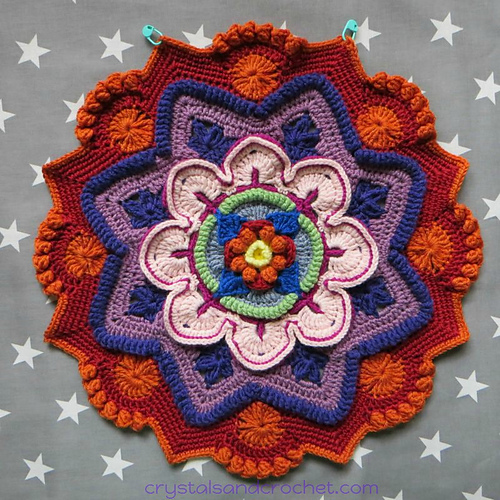
Dedri Uys's iconic blanket combines colorwork, bobble stitches, and intricate construction. This intermediate project uses aran weight yarn and works as a continuous square, building outward from the center. It's designed to be worked over months if you want, making it a wonderful journey rather than a deadline project. The bobbles add surprising depth and texture against the flat stitches, and color changes throughout keep your hands engaged.
Find this pattern on HoneyBee
Helen Shrimpton's advanced blanket uses bobble and post stitches to create a mandala design that radiates from the center. Aran weight yarn in this larger-than-life project means each round is substantial enough to really see the stitch definition. The combination of textures (bobbles, cables, flat areas) creates visual rhythm. This is one for when you want to challenge yourself and have time to invest.

Find this pattern on HoneyBee
Another of Dedri Uys's designs, this blanket combines granny squares with bobbles, post stitches, and surface crochet. Aran weight, worked in the round, with both written and photo tutorials. The mix of textural elements keeps this intermediate project interesting across the many rounds. Each square builds on the last, so you'll see real progress as you work.

Find this pattern on HoneyBee
Jeanne Steinhilber's baby blanket uses bobbles and ripple stitches with stripes and colorwork. Beginner-friendly despite the bobbles, this aran weight project includes both written instructions and a video tutorial. The bobbles are scattered across the ripple background, creating visual interest without overwhelming the pace. A perfect gift blanket that's achievable for newer crocheters.

Find this pattern on HoneyBee
Erica Dietz's beginner hat uses textured stitches including bobbles and post stitches worked in the round from the top down. Aran weight makes this quick, and the textured surface hides tension inconsistencies. The written pattern is straightforward, and the finished hat looks far more complex than it actually is.
Moss Stitch and Linen Stitch
Moss stitch and linen stitch are actually the same thing, named differently in different parts of the world. They're formed by alternating single crochet and chain-1 stitches, creating a delicate textured fabric that looks almost like woven linen. The result is tighter and more structured than basic single crochet, with a sophisticated, dense appearance.
These stitches work wonderfully in garments because they create a fabric with natural drape and excellent stitch definition. The fabric doesn't curl, making it great for blanket borders and tops. The slower pace is meditative compared to longer stitches, perfect for when you want to be present with your work.
Unfortunately, the data provided doesn't include a pattern specifically labeled with moss or linen stitch, but these stitches often appear in "textured" patterns and work beautifully in pieces similar to the Simple Seed Stitch Beanie or any pattern marked as textured. When you're ready to explore moss stitch, look for patterns with "textured" listed in their techniques and check the written instructions to confirm.
Shell Stitch
Shell stitches create scalloped, fan-like edges. You make multiple stitches in one stitch, then skip stitches between shells. The result looks like a row of seashells or fans. Shells are often used on garment edges, blanket borders, and throughout projects where the curved shape adds flowing visual interest.
Shell stitches work from both single shells (a simple three-stitch fan) to elaborate multi-row shells. They're more advanced than basic stitches because the skip-and-cluster pattern takes practice to keep even. But once you get the rhythm, they're deeply satisfying.
Like moss stitch, shell stitch didn't appear explicitly in the patterns provided, but you'll find it in many intermediate blanket and garment patterns. Search for "shell" in the technique tags to find patterns where you can practice this lovely stitch.
Wave and Ripple Stitches
Ripple and wave stitches create undulating patterns across your work. These are constructed with increases and decreases in specific sequences, creating valleys and peaks. Ripple stitches often use triple crochet or double crochet, making them work up quickly. They're visually dramatic and work wonderfully in colorwork.
Ripple stitches are beginner-accessible because the stitch itself isn't complex, just the pattern repeat. Blankets worked in ripple are forgiving to the eye, as slight tension variations actually read as part of the pattern. The wavelike flow makes ripple blankets especially popular for babies and homes.
Find this pattern on HoneyBee
Jeanne Steinhilber's blanket combines ripple stitches with bobbles and stripes, showing how ripples work in colorwork. The aran weight yarn means each wave is substantial. Beginner-level difficulty with video tutorial support makes this accessible even for someone new to ripple stitches. The rolling waves of the fabric are soothing to work on and beautiful to look at.
Cable Stitch
Cable stitches are made with front post and back post double crochet stitches twisted around each other, creating an effect similar to knit cables. They're dimensional, textured, and add a handmade-sweater feel to garments. Cables work beautifully in sweaters, hats, and blankets, though they do require focus to keep the twists consistent.
Cable stitches demand patience and attention. Each cable needs the stitches to twist in the right direction, and dropped stitches in a cable row means carefully fixing that row. But the visual payoff is worth it, especially for pieces where the cables are a focal point.
Find this pattern on HoneyBee
Sarah Arnold's hat includes cables alongside ribbed stitches, showing how cables and ribbing complement each other structurally. The cable definition is crisp in worsted weight, and the top-down construction lets you see the cables take shape as you build.
Basketweave Stitch
Basketweave stitches create a woven appearance by stacking post stitches in specific patterns. Front post stitches alternate with back post stitches to create visual horizontal and vertical lines that look like woven fabric. The texture is moderate, adding interest without the bulk of bobbles.
Basketweave is one of those stitches that looks more complex than it is. The pattern repeat is usually simple, just written in a way that creates visual texture. Once you understand the setup, each row follows the same structure, making it meditative to work.
Basketweave didn't appear labeled in the data provided, but similar dimensional effects appear in patterns using multiple post stitches. Look for patterns combining "front/back post stitch" and "textured" techniques to find basketweave variations and similar woven-looking stitches.
Granny Square
The granny square is the building block of crochet. A granny consists of clusters of double crochet stitches separated by chain spaces, worked in the round to form a square. Granny squares can be worked individually and seamed together, or crocheted together as you go. They're infinitely customizable with color changes, edging variations, and size adjustments.
Granny squares are beloved because they're meditative, portable, and produce something immediately tangible. Each square is a complete thing, making a 40-square blanket feel like a series of small victories rather than one overwhelming project. The open stitch structure also means the fabric breathes, making blankets ideal for any season.

Find this pattern on HoneyBee
Amy Christoffers's cardigan uses granny squares as its construction method. This intermediate sweater combines multiple granny squares with motifs and includes a schematic. Worsted weight means reasonable yardage and workable squares. Building a wearable from granny squares is a wonderful way to understand how squares can become something unexpected.

Find this pattern on HoneyBee
Destany Wymore's square combines granny square construction with lace stitches and charted details. Beginner-friendly despite the lace, this aran weight square includes a written pattern and chart. Each completed square is a small piece of art, making a blanket project feel like a collection rather than a monolith.
Find this pattern on HoneyBee
Dedri Uys's design uses modified granny squares with bobbles, post stitches, and surface crochet. The intermediate-level construction includes photo and video tutorials, making it accessible even for complex squares. Aran weight and worked in the round, each square builds substantially.
Find this pattern on HoneyBee
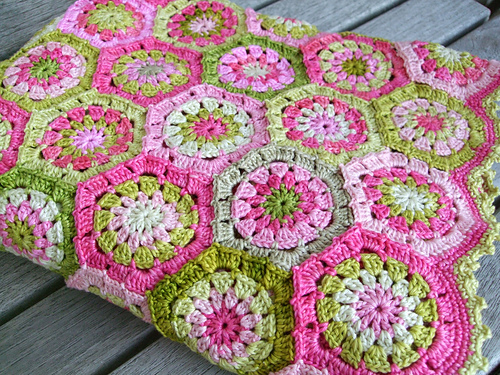
Lucy of Attic24's hexagon uses granny-style construction in a six-sided shape instead of four. This beginner pattern with photo tutorial shows how the granny concept adapts to different shapes. DK weight makes these hexagons smaller and more delicate, and the colorwork throughout keeps the work engaging.
Lace Stitches
Lace stitches create open, airy fabric using combinations of chains and decreases. Patterns emerge from the negative space where there are no stitches. Lace stitches range from delicate eyelet patterns (small holes) to dramatic, flowing open patterns. The beauty of lace is that it's literally see-through, creating a fabric that feels summery and special.
Lace stitches require attention to stitch count and pattern placement, but they're not harder than other stitches, just more particular. A missed stitch in lace is immediately visible, which actually makes them easier to troubleshoot than some textured stitches where errors hide.

Find this pattern on HoneyBee
This intermediate shawl by kungen och majkis uses lace stitches with a charted pattern. Sport weight in a triangle shape, with both photo tutorial and written instructions. The lace creates an intricate pattern that emerges as you work, making this a rewarding project for someone ready to engage with chart reading and lace construction.

Find this pattern on HoneyBee
Kirsten Bishop's shawl combines lace, mesh, textured stitches, and chevron patterns in one intermediate rectangle or triangle. Fingering weight and charted construction. The combination of stitch types makes this a masterclass in lace variations, and the finished piece is a stunning wrap suitable for any occasion.

Find this pattern on HoneyBee
Jennifer Ozses's top uses lace throughout, creating an airy summer garment. Beginner-level despite the lace, this DK weight pattern includes a schematic and written instructions. The lace gives the top a delicate appearance while the construction is straightforward. This proves lace doesn't have to mean advanced.

Find this pattern on HoneyBee
Alexandra Tavel's cardigan mixes lace, granny squares, and textured stitches in a beginner-friendly wrap sweater. Worsted weight with schematic and written pattern. The open lace sections alternate with denser areas, creating visual interest and making the project move along. Perfect for a sweater that looks far more complicated than it actually is.

Find this pattern on HoneyBee
Silke Terhorst's shawl is a beginner-level lace triangle worked top down in fingering weight. The charted pattern and reversible design make this a satisfying introduction to lace shawls. Worked flat with written instructions, this shawl demonstrates how elegant even simple lace can be.

Find this pattern on HoneyBee
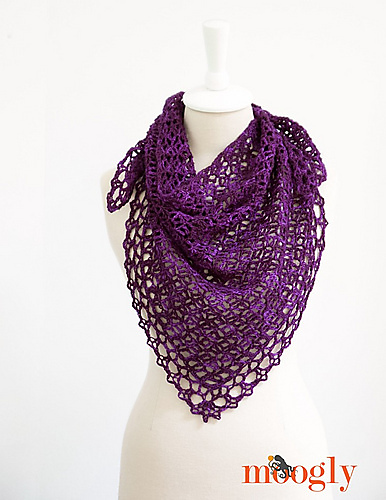
This beginner-level shawl by njSharon and Debi Adams uses lace with a butterfly motif. Lace weight yarn makes this delicate and substantial at the same time. The triangle shape is worked top down with written pattern, chart, and video tutorial. Perfect for someone drawn to lace but wanting something quick and achievable.
Find this pattern on HoneyBee
Tamara Kelly's shawlette uses lace stitches in a reversible triangle. Fingering weight, beginner-level, worked flat and bottom up. The reversible design is a bonus feature, and the lace is simple enough for someone new to the stitch. Written pattern, chart, and video tutorial make this fully supported.
Tips for Stitch Success
Watch your stitch definition. Thicker yarn shows stitch structure better than thin yarn, but it also makes mistakes more visible. When learning a new stitch, using a medium-weight yarn in a solid color lets you see exactly what your stitches are doing. Variegated yarn can hide definition, making it hard to tell if your tension or stitch placement is off.
Tension matters more in textured stitches. Bobbles, cables, and post stitches all rely on consistent tension to look polished. Take extra care with these stitches to keep your loops the same size throughout. If your tension shifts midway through a row, the stitch structure becomes obviously uneven.
Keep good lighting. Stitch definition is hard to see in dim light, and squinting actually changes how you position your hook and yarn. A good lamp or working near a window makes stitch work immediately easier and more enjoyable.
Count your stitches regularly. In lace patterns especially, it's easy to accidentally skip a stitch or add an extra one. Checking your stitch count at the end of every row prevents needing to rip back large sections later.
Use stitch markers generously. Mark your beginning and end of round, mark pattern repeats, mark where you're supposed to skip a stitch. Stitch markers are free insurance against mistakes.
Practice on swatches first. Before committing yardage to a new stitch, make a 6-inch swatch. You'll understand the rhythm of the stitch, see how it behaves in your chosen yarn, and have a reference piece to look back at.
FAQ
What's the difference between bobble and popcorn stitch?
Bobble and popcorn stitches are essentially the same thing, just with slightly different construction methods and names that vary by region. Both create a 3D bump by clustering stitches in one stitch and pulling through all loops at once. The visual effect is identical. Use whichever name your pattern uses.
Can I substitute a lace stitch for a solid stitch in a pattern?
Generally, no. Lace stitches use chain spaces to create the open pattern, which means fewer stitches overall and less fabric density. Substituting lace into a pattern designed for solid stitches will create a too-loose fabric that doesn't hold the garment's shape. It's safer to try lace in patterns specifically designed for it. If you do want to experiment, make a swatch first to see if the finished fabric will work.
Why does my ribbed stitch look twisted?
Ribbed stitch requires post stitches (front post and back post) worked in alternating columns. If your ribbing looks twisted or spiraled, you're likely working post stitches in the wrong direction on some rows. Check your pattern carefully to confirm which rows should have front posts and which should have back posts. Watching a video tutorial while working the first row or two often clarifies the rhythm.
Do I need to block lace stitches?
Blocking helps lace stitches reach their full potential. The open pattern shows its true structure once the fabric is gently stretched and dried flat. Steam blocking is gentler on lace than wet blocking and helps the fabric settle into its intended shape without distorting individual stitches.
What yarn weight works best for learning new stitches?
Worsted weight or aran weight is ideal for learning textured stitches because the yarn is thick enough to see clearly, but not so thick that the stitches become unwieldy. Avoid fingering weight when first learning a stitch, as thin yarn makes mistakes harder to spot. Once you understand the stitch, you can play with thinner yarns knowing you'll understand what you're looking at.
Next Steps
Pick one stitch that calls to you and find a pattern on HoneyBee that features it. Spend a few hours making a swatch or a complete project. Pay attention to how the stitch feels in your hands, how it changes with tension, how light affects how it looks. Each stitch has its own personality, and discovering that is part of the joy of crochet.
If you're drawn to textured pieces, explore the crochet patterns on HoneyBee filtered by difficulty level that matches your experience. You'll find projects of every size and type using the stitches in this guide. The community is here, and every pattern you make teaches you something new about these timeless stitches.
Happy hooking.
More from the HoneyBee blog
Pattern round-ups, tutorials, and crafting inspiration from the HoneyBee community.
Read more articles