Crochet Graph Patterns: How to Read and Create Graphghans
Learn how to read crochet graphs and charts, understand graphghan patterns, and create stunning colorwork blankets and projects.
On this page26 sections▾
If you've ever scrolled through crochet patterns and felt intimidated by graphs and charts, you're not alone. Charts can look like cryptic puzzles at first glance. But here's the truth: reading a crochet graph is actually easier than reading written instructions once you understand the basic system. Even better, learning to work from charts opens up an entire world of colorwork possibilities, including the delightful graphgan (graph-based blanket) trend that's taken the crochet world by storm.
In this guide, we'll demystify crochet graphs, explain how to read and work from charts, and share some gorgeous graphghan-style patterns to inspire your next project.
What Is a Crochet Graph?
A crochet graph (or chart) is a visual representation of a crochet pattern. Instead of reading "single crochet in the next stitch, double crochet in the next two stitches," you look at a grid where each square or symbol represents a stitch, and the position of the square shows you where to place that stitch.
Graphs are especially useful for:
- Colorwork patterns where you're switching yarn colors (like tapestry crochet or graphghan projects)
- Complex stitch sequences that are easier to see visually than to read line by line
- Shaping patterns where increases and decreases form specific designs
- Texture-heavy patterns like cables or bobbles, where you can see the three-dimensional effect
Think of a crochet chart like sheet music for musicians. Once you understand the notation, you can follow along without constantly deciphering written instructions.
Understanding Chart Symbols
Different patterns use different symbols, so the first thing you do when you get a new chart is look at the legend. This is where the designer explains what each symbol means in their specific pattern.
Common Symbols You'll Encounter
Most crochet charts use these standard symbols:
- Square (empty or shaded) - Single crochet (sometimes different shadings mean different colors)
- T shape or cross - Double crochet
- Tall T shape - Treble crochet
- V shape - Decrease
- Multiple stacks of stitches - Increase or fan stitch
- Circle or dot - Special stitch (chain, slip stitch, bobble, or picot depending on the pattern)
- X or cross - Skip this stitch or special instruction
- Slashed square - Reverse single crochet or surface crochet
Color in Charts
For colorwork patterns, each color gets its own symbol or shading. The legend shows you which color corresponds to which symbol. As you work, you simply follow the chart and switch yarn colors when the symbol changes.
Reading and Working From Charts
Here's the practical part: how you actually use a chart while crocheting.
Start at the Right Place
Most crochet charts are read bottom to top, left to right, just like you work rows of crochet. The bottom row of the chart is the first row you crochet, and you work upward from there.
Some patterns, especially colorwork patterns, might start differently. Always check the pattern notes to see where to begin.
Charts for Flat vs. Circular Construction
- Flat patterns (blankets, scarves) are read in rows, left to right, then right to left on the next row. Your chart will show this with arrows indicating direction.
- Circular patterns (worked in the round, like amigurumi) are often read from the inside out, spiraling outward. The chart will indicate the starting point.
Keeping Your Place
Use highlighters, clothespins, or sticky notes to track which row you're working on. Some crocheters print their charts and mark them with a ruler or sticky tape that moves down as they complete each row. Others use digital chart-reading apps that track progress for you.
Counting Stitches
Charts make it easy to count stitches. Each square represents one stitch, so if a row on the chart has 50 squares, you'll crochet 50 stitches. If your stitch count doesn't match, you know something's off before you've gone too far.
Graphgan Construction Methods
Graphgans are blankets made from crochet charts, and there are several ways to construct them.
Traditional Row-by-Row Method
This is the most straightforward approach: you read the chart row by row and crochet in a single piece from start to finish. Each row of the chart becomes a row of crochet. This method is great for:
- Simple, consistent-gauge projects
- Learning to work from charts
- Projects where you want to be able to frog and rewrite if needed

Find this pattern on HoneyBee
Modular or Motif Method
Some graphgans are made from multiple smaller squares or sections that are crocheted separately and then joined. This method is perfect for:
- Projects you want to carry around easily
- Designs where color placement works better in chunks
- Situations where you want to adjust size by adding or removing motifs

Find this pattern on HoneyBee
Sophie's Universe CAL is a stunning example of a modular graphghan project that builds complexity as you add more squares.
Corner-to-Corner (C2C) Method
C2C crochet builds from one corner diagonally to the opposite corner, creating a diamond-shaped fabric that you then crop into a square. It's especially popular for graphghan projects because:
- It automatically centers designs
- You can adjust the finished size by continuing or stopping earlier
- The diagonal construction creates interesting stitch effects
Tapestry Crochet Method
Instead of changing yarn colors mid-row (which can be bulky), tapestry crochet carries the unused color inside your stitches. This creates a more polished, reversible fabric. You follow charts exactly as with other methods, but you're carrying yarn instead of switching colors.
Graph Pattern Tips
1. Swatch Before Starting
Even if the pattern has measurements, crochet a small test swatch from the chart before starting the full project. This confirms that your gauge matches the designer's, which is crucial for colorwork to look correct.
2. Use Chart Apps and Tools
Apps like Stitchmastery, Crochet Paint, or TinyChart let you load PDF charts and track your progress digitally. Some even auto-highlight as you work, making mistakes harder to miss.
3. Print Enlarged Charts
If you're working from a digital PDF, print the chart at a larger size than feels necessary. You'll spend more time looking at the chart than at your crochet, so make it easy on your eyes.
4. Join Colors Carefully
When switching colors in tapestry crochet or stranded methods, weave in ends as you go rather than saving them for the end. This prevents frustrated end-weaving marathons and keeps your project tidy.
5. Understand Gauge for Graphs
Graph-based projects are especially sensitive to gauge. A half-stitch difference per inch changes how the design looks. Always swatch, measure, and compare to the pattern's gauge before committing.
Popular Graph-Based Patterns

Find this pattern on HoneyBee

Find this pattern on HoneyBee

Find this pattern on HoneyBee
The Campfire Cardigan combines stripes and colorwork for a modern look.

Find this pattern on HoneyBee
Sophie's Garden demonstrates advanced modularity and shaping in chart form.
Find this pattern on HoneyBee
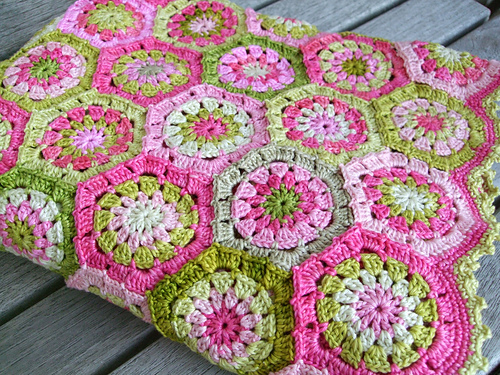
Hexagon How-To breaks down the hexagon structure visually, making it easier to understand the shape as you build it.
From Graphs to Original Designs
Once you understand how to read charts, the natural next step is creating your own. Simple digital tools let you draw or upload pixel art and convert it to crochet charts. Many crocheters use graph paper or free online charting tools like pic2pat to turn photos into crochet designs.
Design Considerations
- Aspect ratio: Crochet stitches aren't perfect squares. Single crochet is roughly 4:3, so your chart-to-stitch ratio needs adjustment
- Stitch choice: Different stitches (single, double, treble) have different widths, which affects how your design looks
- Color limitation: Simple designs with fewer colors are easier to work and read
- Scale: Larger designs are easier to see while working; tiny detail gets lost in translation
Graph Pattern FAQs
Q: What's the difference between a chart and a graph? A: They're essentially the same thing. "Chart" is more common in American crochet patterns, "graph" in British patterns. Some designers distinguish graphs (colorwork) from charts (shaping), but the terms are largely interchangeable.
Q: Can I enlarge or shrink a graphghan pattern? A: Yes, but it affects the design. Changing hook size or yarn weight makes the overall blanket larger or smaller while maintaining the same stitch count and design proportions. Changing the number of rows or stitches changes the design itself.
Q: Is tapestry crochet harder than color switching? A: Neither is objectively "harder"-they're just different techniques. Tapestry crochet creates a more polished, reversible fabric but requires carrying yarn. Color switching is simpler but potentially bulkier. Try both and see which you prefer.
Q: What if I make a mistake in a graph-based project? A: If it's a few rows back, you can frog back and correct it. If it's far back or you didn't notice until the end, tapestry crochet mistakes are more forgiving because the unused colors are hidden inside the fabric.
Q: How do I read a chart that's larger than one page? A: Charts are typically printed with gridlines or section markers. Print it as a large format, or tile multiple pages together using the pattern's registration marks. Some designers provide digital chart files that let you view the full thing on screen.
Q: Can I mix chart and written instructions in one pattern? A: Absolutely. Many patterns combine charts for the complex parts with written instructions for simple sections. This is actually ideal because it uses the best format for each part.
Start Your Graph Journey
Crochet charts open up a whole new category of patterns and projects. Whether you're attracted to the visual appeal of graphgans, the precision of stitch charts, or the possibility of creating your own designs, learning to read charts is a valuable skill that expands your crochet possibilities.
Start with a simpler chart-based pattern, practice reading as you crochet, and soon you'll wonder why charts ever seemed intimidating. Browse our collection of free graph-based crochet patterns at HoneyBee and find your next chart-reading adventure.
More from the HoneyBee blog
Pattern round-ups, tutorials, and crafting inspiration from the HoneyBee community.
Read more articles