19 Free Knitted Hat Patterns for Every Season
19 free knitted hat patterns sorted by season and style: cold-weather beanies, lighter all-season picks, textured and cable hats, plus a few specialty designs.
On this page24 sections▾
A hat is the project knitters keep coming back to. Small enough to finish in a couple of evenings, portable, repeat-friendly, and stash-flexible: most hat patterns are written to work across multiple yarn weights, so the same construction produces a fingering-weight all-season slouch or a worsted-weight winter beanie depending on what you cast on with.
These 19 free knitted hat patterns are sorted by season and style. Most are beginner or advanced-beginner level. The technical step up — cabled and textured hats — gets its own section in the middle.
Cold Weather Hats
Classic Ribbed Hat

Find this pattern on HoneyBee
Purl Soho. DK weight, seamless, ribbed throughout. The reference beginner hat. Stretchy enough that the same finished circumference fits a range of head sizes. Make this once in a yarn you love, and you'll make it again at least twice.
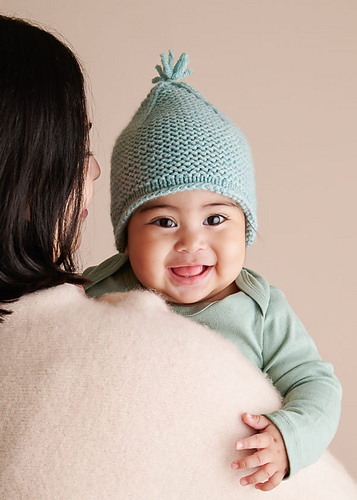
Garter Ear Flap Hat
Find this pattern on HoneyBee
Purl Soho again. Aran weight, garter stitch, ear flaps added via short rows. The thick garter fabric is what makes this work as a cold-weather hat: garter traps air better than stockinette of the same yarn.
Jason's Cashmere Hat

Find this pattern on HoneyBee
Melissa Thomson. Aran weight, vertical cables. The cables are basic two-over-two crosses, repeating up the body of the hat. Good first cabled project; the small scale means you'll memorize the cable chart by the third repeat.
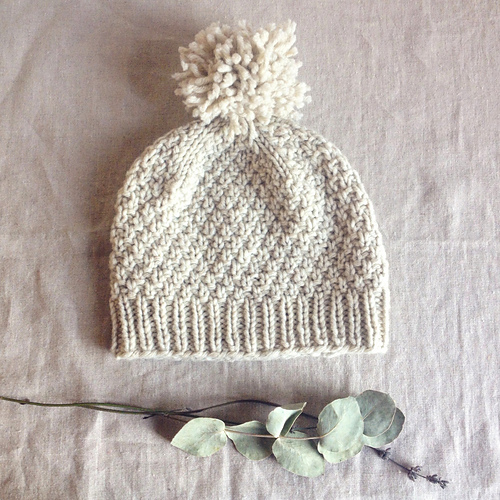
Beloved Aran
Find this pattern on HoneyBee
Solenn Couix-Loarer. Aran weight, plain stockinette. Sometimes the pattern that wins is the one that gets out of the way of the yarn. Use this for the hand-dyed skein you've been afraid to commit; the simple stitch lets the color do the work.
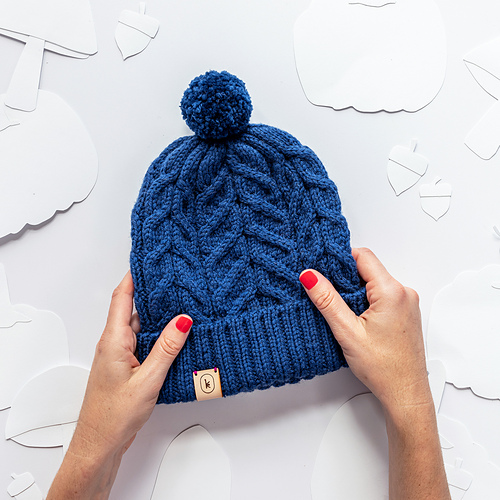
October Hat
Find this pattern on HoneyBee
Sloane Rosenthal. Aran weight, vertical cables with a provisional cast-on so you can build a fold-over brim. Both written and charted instructions. A midweight option for transitional weather rather than peak winter.
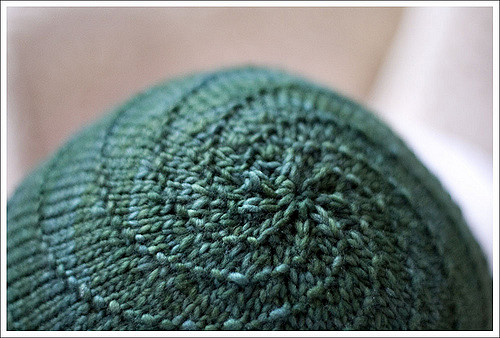
Hurricane Hat
Find this pattern on HoneyBee
Andrea Guldin. Aran weight, post stitches building a textured surface. Looks more complex than it is to make; post stitches are easier than they appear, especially at hat scale where you're not tracking them across hundreds of stitches.
Antler Toque

Find this pattern on HoneyBee
tincanknits. Worsted weight, with branching cable details at the crown. The cables are charted, which is the right way to read them on this design — the branching pattern is harder to follow as text than as a diagram.
Bankhead

Find this pattern on HoneyBee
Susie Gourlay. Worsted weight, ribbed, seamless. The unflashy reliable hat. Pair it with the Classic Ribbed Hat above; they cover slightly different fit profiles and are both staples.
Lighter and All-Season
Sockhead Slouch Hat

Find this pattern on HoneyBee
Kelly McClure. Fingering weight, slouchy. The fingering weight is the key feature: lighter against the head, suitable for spring and fall in colder climates and for actual winter in warmer ones. Pair with a hand-dyed gradient or speckled skein for visual interest.
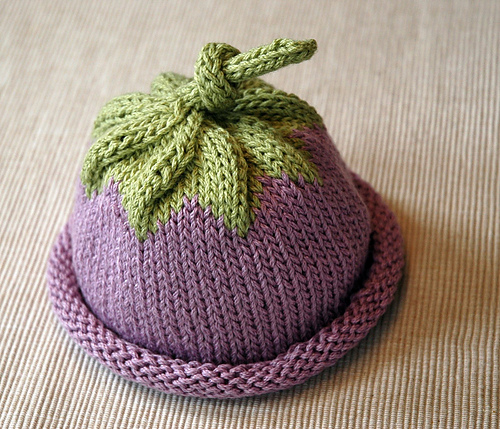
Berry Baby Hat
Find this pattern on HoneyBee
Michele Sabatier. Worsted weight, baby-sized, with stranded colorwork. The small circumference makes this a forgiving first-colorwork project: the color-change yarn floats stay short, so float tension is easier to manage.
wurm

Find this pattern on HoneyBee
Katushika. Sport weight, with raised ridges along the body. Lightweight enough to pack into a coat pocket, with enough texture to read as deliberate rather than plain.
Capucine

Find this pattern on HoneyBee
Adela Illichmanova. Bulky weight, hood-style with a tassel. The bulky weight finishes fast; cast on after lunch, bind off before dinner. Sits close to the neck which makes it warmer than a standard beanie despite being lightweight to wear.
Textured and Cable Hats
Barley Worsted

Find this pattern on HoneyBee
tincanknits. Worsted weight, textured fabric built from knit-and-purl stitch combinations. No cables. The texture is the project; the construction is plain. Useful for learning that texture doesn't require advanced techniques.
Rikke Hat

Find this pattern on HoneyBee
Sarah Young. DK weight, fully reversible — both faces of the fabric look intentional, so you can wear it inside-out for a slightly different look. The reversibility comes from a specific knit-and-purl arrangement; the technique transfers to scarves and cowls.
Graham

Find this pattern on HoneyBee
Jennifer Adams. Worsted weight, vertical ribbing throughout. Also reversible. Reads modern and unfussy. Good for someone who wears mostly neutrals; the rib disappears into a wardrobe.
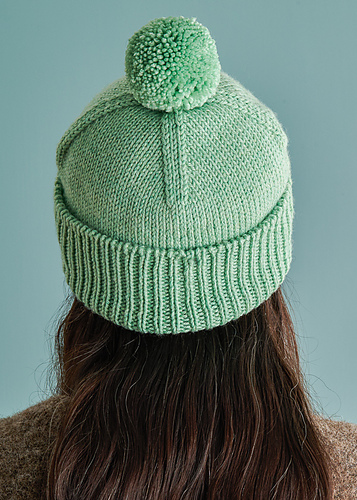
Classic Cuffed Hat
Find this pattern on HoneyBee
Purl Soho. Worsted weight, stockinette body, ribbed cuff that folds up. The fold-up cuff doubles as a way to adjust coverage; full cuff for warmth, rolled down for length over the ears.
1898 Hat

Find this pattern on HoneyBee
Kristine Byrnes. Worsted weight, slip-stitch texture, Kitchener stitch finish at the crown. The Kitchener stitch is the technique to learn here — it produces an invisible graft instead of the puckered hole most decrease-to-crown finishes leave.
Specialty Hats
Copy.Cat C.C Beanie

Find this pattern on HoneyBee
Emily Ingrid. Worsted weight, ribbed, reversible. Designed to mimic the silhouette of a popular commercial beanie. The pattern is simple enough that you can knock out three in a weekend if you're making them as gifts.
Quick Ombre Hat

Find this pattern on HoneyBee
Emily Dormier. Worsted weight, two-color stranded ombre. The ombre effect comes from gradually shifting color density rather than from gradient yarn, which means you control the look exactly. Useful pattern if you have one full skein and one partial in compatible colors.
Tips for Perfect-Fit Hats
Measure your head, then subtract. Most hats are designed for 2 to 4 inches of negative ease — the finished circumference is smaller than your head. A 22-inch head wears an 18 to 20 inch hat comfortably. Without that negative ease the hat slides up your forehead all day.
Yarn weight = warmth and fit feel. Fingering and sport produce light, packable hats with stretch. DK splits the difference. Worsted and aran are the standard winter weights. Bulky finishes fastest but the stitches read big, which doesn't suit every style.
Crown shaping decides the silhouette. Hats with evenly distributed decreases produce a domed crown. Hats with concentrated decreases (centered, paired) produce a flatter top. Neither is wrong; pick by what you want the finished hat to look like from the side.
Block the finished hat over a balloon or a bowl. This is the upgrade most knitters skip. A wet hat dried over a head-shaped object settles its tension and produces noticeably crisper finished stitches.
Avoid the crown hole. As the crown tightens, the last few stitches need to be cinched aggressively. Thread the working yarn through them twice with a tapestry needle, pull tight, then weave the tail through the inside of the hat. The closed-up crown is one of the small finishing details that separates handmade-looking from store-bought-looking hats.
Browse all hat patterns on HoneyBee or filter by beanie-toque or beginner.
More from the HoneyBee blog
Pattern round-ups, tutorials, and crafting inspiration from the HoneyBee community.
Read more articles