
25 Free Amigurumi Patterns Worth Making Right Now
25 free amigurumi patterns sorted by category. Animals, pop-culture, food and novelties, seasonal, and a few quick wins for an evening project.
On this page32 sections▾
Amigurumi is the most forgiving category in crochet. Small, three-dimensional, and self-contained, which means even a project where you got the gauge slightly wrong still produces a finished toy with personality. Most patterns finish in an evening or two. Yarn from your stash works. The 25 free amigurumi patterns below are organized by what you're in the mood to make: cuddly animals, characters, food and novelties, seasonal pieces, and quick single-session wins.
Cuddly Animals
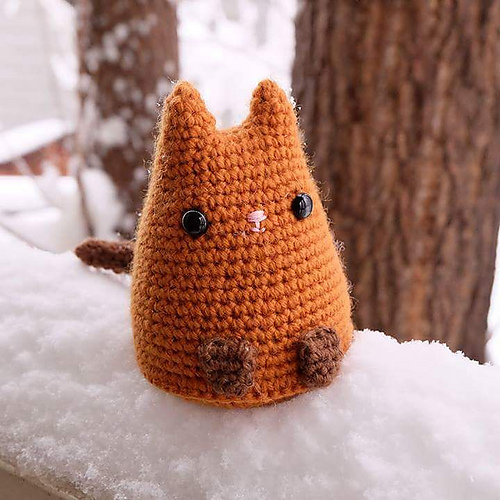
Dumpling Kitty
Find this pattern on HoneyBee
Sarah Sloyer's round-bodied cat in aran weight. Holds its shape well stuffed firm. The optional stripes are simple color changes; skip them on a first version and add them to your second.
Amineko Crocheted Cat

Find this pattern on HoneyBee
Nekoyama's amigurumi cat works at light fingering weight, which produces tighter stitches and a more refined finished cat than worsted patterns. If you have several hand-dyed mini skeins, this is a pattern that scales them up into a family of cats.
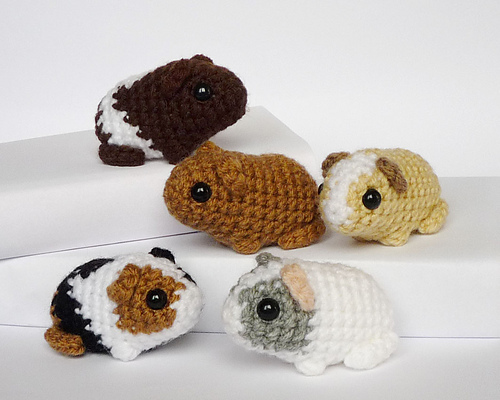
Newborn Guinea Pig
Find this pattern on HoneyBee
Kati Galusz. Small enough that you can finish three or four in an afternoon. If you're making them as stocking stuffers, batch the construction: heads first, then bodies, then assembly.
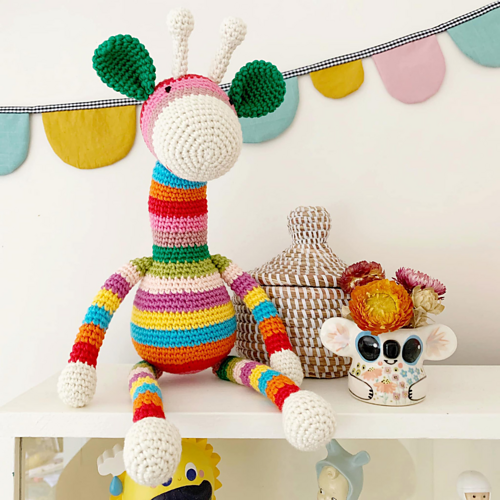
Crochet Giraffe
Find this pattern on HoneyBee
Emma Dent's giraffe in sport weight with stranded color stripes. Good first colorwork project because the stripe sections are short.
Tanner the Triceratops

Find this pattern on HoneyBee
Nicole Chase's worsted-weight triceratops. The three horns and frill do the visual work. Goes fast because worsted weight on a small toy means short rounds.
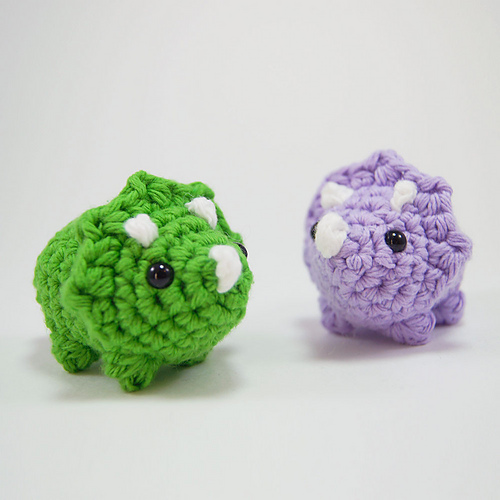
Mini Triceratops Amigurumi
Find this pattern on HoneyBee
LouiesLoops. Smaller and seamless: the entire dinosaur is one piece, so there's no assembly. Photo and video tutorials. If you've never made a seamless amigurumi, start here rather than with Tanner above.
The Sleepy Fox

Find this pattern on HoneyBee
Eserehtanin's drowsy fox. Pattern is gauge-flexible; whatever yarn weight and hook you have will work, the finished fox just changes size. Closed eyes mean no safety-eye placement decisions.
Llama-No-Drama

Find this pattern on HoneyBee
Nancy Anderson. Aran weight, intermediate level. The textured fleece is built from post stitches. Skip this one if post stitches still feel awkward; pick it up after a few projects in.
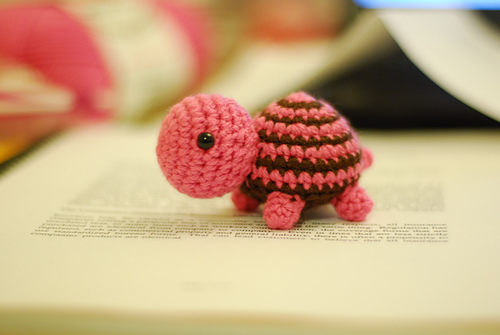
Tiny Striped Turtle
Find this pattern on HoneyBee
KristieMN. Worsted weight, small, durable enough for actual handling. The striped shell teaches you stranded color changes on a forgiving canvas.
Character and Pop-Culture Designs
Baby Yoda Amigurumi

Find this pattern on HoneyBee
LarissaMaced. Yarn-weight flexible. The big-head-small-body proportions are forgiving of slightly wonky shaping, which is why this is the more beginner-friendly of the two Baby Yodas on the site.
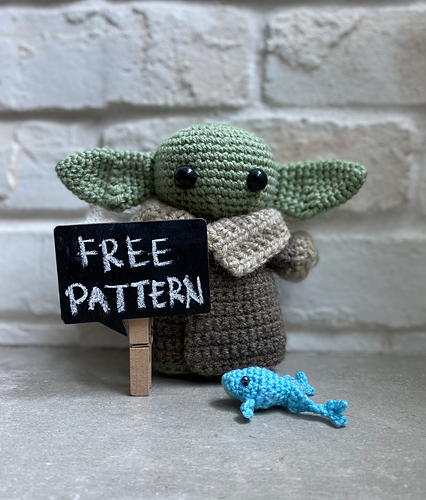
Baby Yoda
Find this pattern on HoneyBee
Elaine S. DK weight, more refined finish, with colorwork detail in the robe. The DK weight gives the face features cleaner definition than the worsted version above.
Hobbes

Find this pattern on HoneyBee
Ann S Balla's aran-weight tiger with stranded stripes. The stripe color changes happen at regular intervals, so it's a useful first stranded project.
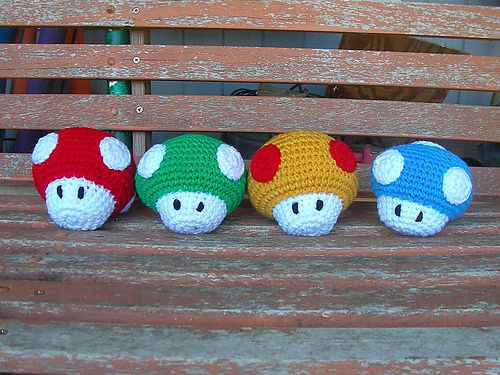
Mario Mushroom
Find this pattern on HoneyBee
Linda Potts. Round, simple, minimal embroidery. Good batch project; make three in different colorways for a shelf grouping.
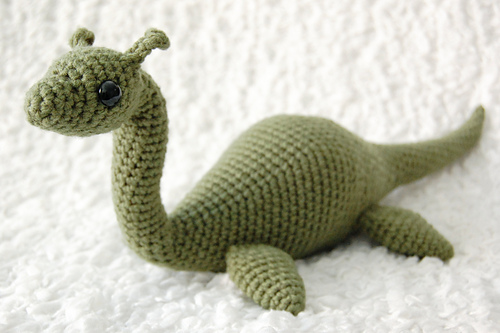
Nessie
Find this pattern on HoneyBee
26 Donuts. Worsted weight, long curved neck. The shaping along the neck teaches you to read decrease placement, which transfers to almost every animal amigurumi after.
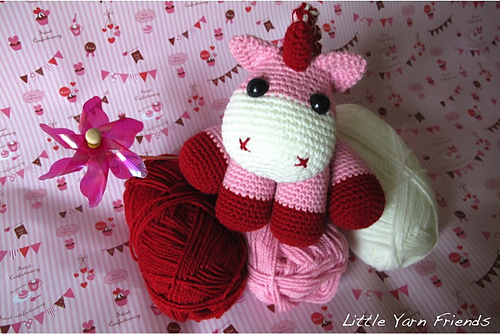
Lil' Baby Unicorn
Find this pattern on HoneyBee
Rachel Hoe. Gauge-flexible, simple shaping, the mane and horn add the personality.
Food and Novelty Items
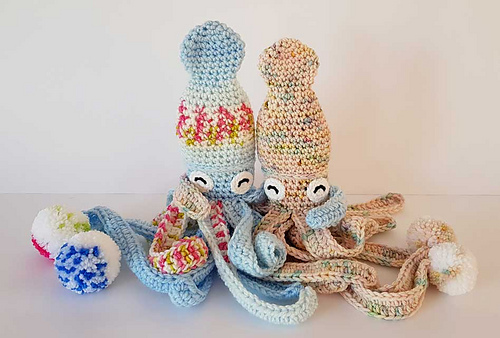
Hubble the Squid
Find this pattern on HoneyBee
Projectarian. DK weight, seamless. Eight short arms. Photo tutorial. Sized small enough to be a portable project for travel or commutes.
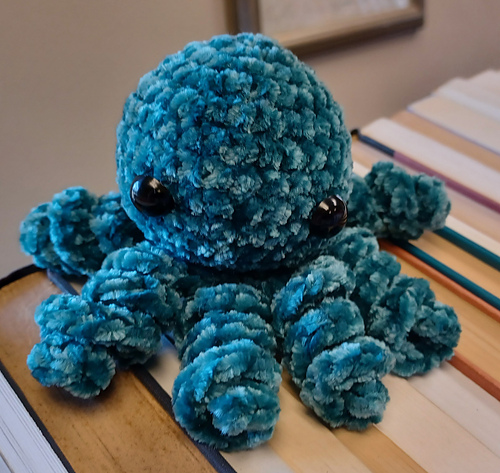
Mini Amigurumi Octopus
Find this pattern on HoneyBee
Sarah Hearn. Yarn-weight flexible. Tentacles are individual arms attached at the end. Photo tutorial.
Amigurumi Spider

Find this pattern on HoneyBee
Cassandra Babb's seamless aran-weight spider. The legs are constructed inline, no seaming. Try it in pastel for a non-spooky version.
Mosaic Goldfish

Find this pattern on HoneyBee
Sweet Softies. Fingering weight, seamless, mosaic technique. The mosaic colorwork is what makes this one stand out; the technique is worth learning even if you never make another goldfish.
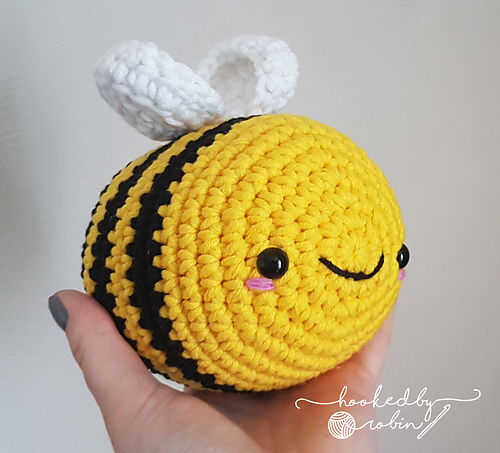
Bumblebee
Find this pattern on HoneyBee
Hooked by Robin. Bulky weight, video tutorial. Finishes in one sitting. The stripes are the project; everything else is round single crochet.
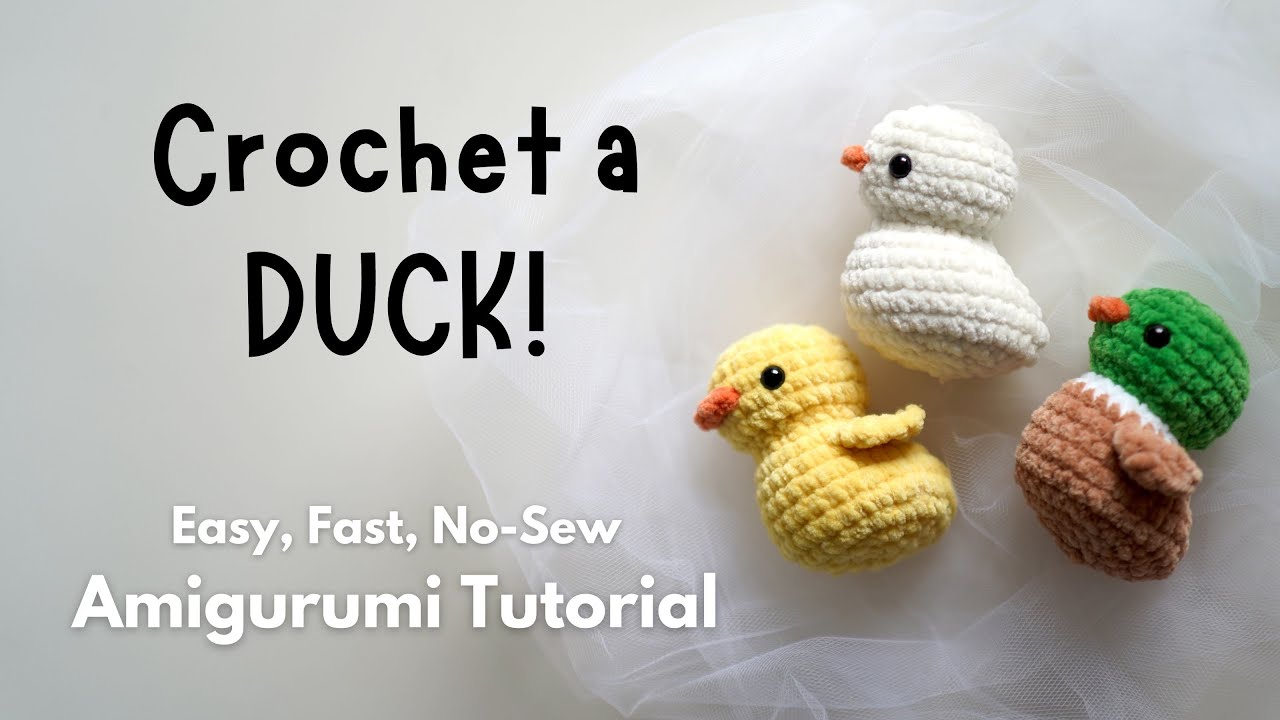
Good Luck Duck
Find this pattern on HoneyBee
Sweet Softies. Super-bulky, seamless, one-piece. A genuinely fast project — start it after lunch and you'll be sewing on the bill before dinner.
Seasonal and Holiday Designs
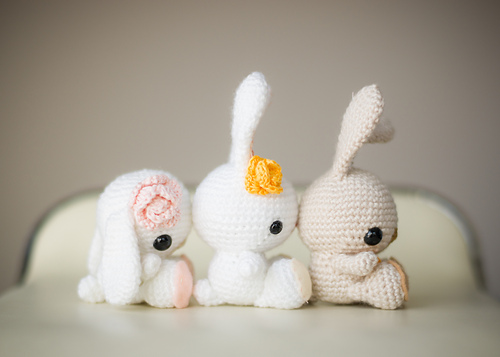
Spring Bunnies
Find this pattern on HoneyBee
Stephanie Jessica Lau. Sport weight, three-dimensional, with schematic diagrams. The pattern includes variations for floppy-eared and upright-eared versions; do both for a basket of mixed bunnies.
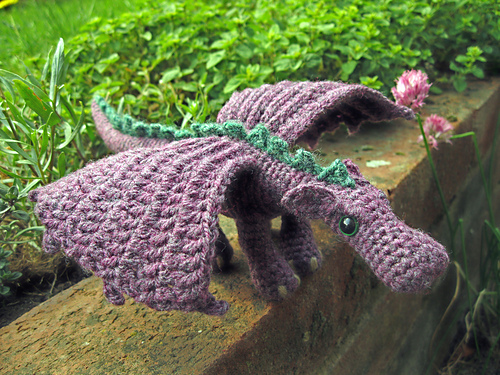
Fierce Little Dragon
Find this pattern on HoneyBee
Lucy Collin. Intermediate level, DK weight, with front and back post stitches for the scaled texture. The scales are the project. Skip this on a first amigurumi but come back to it once post stitches are second nature.
Quick Wins
Granny Square Chicken

Find this pattern on HoneyBee
Sweet Softies. Worsted weight, granny squares assembled into a chicken. Modular, with natural break points, so you can work on it in 20-minute chunks.
Classic Stuffed Bunny

Find this pattern on HoneyBee
ChiWei Ranck. Super-bulky, weighted, very squishable. If you want a hug-the-toy bunny rather than a display-the-toy bunny, this is the construction for that.
Amigurumi Tips
Use polyester fiberfill, not yarn scraps. Fiberfill distributes evenly, doesn't bunch, and doesn't peek through stitches. Yarn scraps form lumps no matter how carefully you pack them.
Eyes go on before stuffing. Once the body is stuffed, the inside of the head isn't accessible. Place safety eyes (or embroidered eyes if that's your style) at the point where the head is roughly half stuffed: that's when you can still adjust the placement and reach behind to secure.
Tighter gauge than you'd use for a garment. Amigurumi stitches need to be dense enough that the stuffing doesn't show through. Go down at least one hook size from what the yarn label recommends.
Invisible decreases beat regular decreases. A regular sc2tog leaves a visible bump. The invisible decrease (front-loops-only sc2tog) keeps the fabric smooth. Learn it before your second project.
Batch when you're making more than one. Make all the heads first, then all the bodies, then assemble. The rhythm pays off by piece three.
Getting Started
Supplies: worsted yarn in two colors, a 5mm hook, polyester fiberfill, a yarn needle, scissors, and either safety eyes or embroidery floss. Under $20 total for the first project.
Skills: magic ring, single crochet, single crochet increase (2 sc in one stitch), and single crochet decrease (sc2tog or invisible decrease). That's it. Almost every amigurumi pattern uses these four things in different combinations.
Browse all amigurumi patterns on HoneyBee, or filter by animals, dolls, or softies.
More from the HoneyBee blog
Pattern round-ups, tutorials, and crafting inspiration from the HoneyBee community.
Read more articles